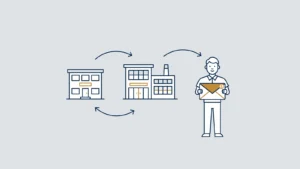
Starting a business in the Netherlands involves more than choosing a company name and obtaining a KVK number. A foreign entrepreneur needs to decide which entity will enter into contracts, where commercial risks will sit, who may represent the business and how Dutch employment and regulatory obligations will be managed. A Dutch private limited company, or BV, is one option. Operating through a registered branch of an existing foreign company is another. Neither option automatically gives an owner permission to live or work in the Netherlands. [S01][S02][S03]
This guide is for international small and medium-sized businesses, founders and investors preparing to sell, hire or establish operations in the Netherlands. It separates company-law decisions from immigration and tax questions, explains what to arrange before signing commitments and provides a practical preparation framework. The examples are hypothetical and do not describe results achieved for clients.
Start with the activity, not the company formation package
Before comparing incorporation offers, write down what the Dutch operation will actually do. Will it employ a sales manager, hold stock, rent premises, develop software, buy a local business or simply sell goods from abroad? Who will negotiate and sign contracts? Where will management decisions be made? These questions shape the legal structure and the information required by banks, advisers and public authorities.
A manufacturer supplying Dutch customers from abroad has a different risk profile from a founder opening a restaurant with employees and a long lease. A consultancy with one Dutch-based manager may need employment and tax advice even before it needs a separate subsidiary. Conversely, a distributor taking substantial product and credit risks may have good reasons to separate the Dutch operation from its overseas parent.
Prepare a one-page operating model. Identify products, customers, personnel, premises, financing, expected commitments and countries involved. This is a working document for your legal, accounting and tax advisers, not a substitute for their analysis. It helps prevent each adviser from working with different assumptions.
Dutch BV or foreign-company branch: what is the difference?
A BV is a Dutch legal entity with its own rights and obligations. A branch is an establishment of the foreign company, not a separate legal person. That distinction matters when deciding which business signs a lease, employs staff or owes a supplier. A registered branch does not by itself create a liability barrier between the Dutch activities and the foreign company. [S01][S02]
A BV can make it easier to organise separate ownership, local investment and a future sale of the Dutch business. However, separate legal personality is not an absolute shield. Personal guarantees, pre-incorporation commitments, improper management and particular liability rules may create exposure outside the BV. The decision should therefore concern actual contracts and governance, not the marketing promise of “limited liability”. [S03]
A branch may fit an established foreign company that wants to operate directly in the Netherlands and maintain one contracting organisation. It also means customers and creditors may need information about the overseas entity. Consider whether that structure works for your banking, insurance, financing and procurement relationships.
The commercial register, corporate law and tax law do not necessarily use identical tests for a Dutch establishment. A KVK conclusion is not a complete answer to questions about a permanent establishment, payroll taxes or VAT. Ask a tax specialist to assess those issues separately.
Incorporating a Dutch BV as a foreign owner
Incorporating a BV requires a Dutch civil-law notary. The notary prepares the incorporation deed and articles of association and handles the relevant registration steps. A very small nominal share capital is legally possible, but nominal capital says little about the funding needed to run the business responsibly. Budget for operations, professional advice, compliance and unexpected delays rather than treating the minimum capital as the cost of starting a company. [S03]
Before instructing the notary, settle the ownership and management questions. Who will hold the shares? Will an existing foreign parent invest, or will individuals invest directly? Who becomes a director? Which decisions require shareholder approval? Does anyone receive special rights? A standard incorporation deed may not reflect the arrangements commercial partners believe they have made.
Where several founders are involved, align the articles with a shareholders’ agreement. Consider further funding, transfer restrictions, information rights, deadlock, departure and valuation. A handshake about “equal control” is not enough when one founder later wants to borrow money, appoint a family member or sell shares.
Do not assume that a contract signed before incorporation will automatically become harmless once the BV exists. Identify the person or entity signing, state the intended structure accurately and obtain advice about adoption of commitments and possible personal liability. This is particularly important for leases, purchases and employment offers.
Registering a foreign company with KVK
A foreign company with an establishment in the Netherlands generally needs registration in the Dutch Business Register. Businesses without a Dutch establishment may still have Dutch tax obligations. Foreign businesses supplying personnel can face additional registration requirements even without a Dutch branch. The correct route depends on the activity, not simply on whether the company has Dutch customers. [S01][S04]
Prepare the foreign company’s registration evidence, constitutional documents, ownership structure and details of representatives. KVK requirements can include recent registry documents, certification and accepted-language versions. A document accepted for one procedure is not necessarily sufficient for the bank, notary or another authority. Confirm the current document list before ordering translations or legalisation. [S01]
Check consistency across all documents. Differences in spelling, transliteration, company number or registered address can create unnecessary questions. Turkish company documentation, for example, should make clear which legal entity is involved and who can bind it; a trading name or English translation alone may not be sufficient identification.
Keep a central onboarding folder with the approved versions, dates and responsible contact. Record which organisation received which documents. Avoid distributing personal identity documents through ordinary group email when a secure channel is available.
UBO registration, bank onboarding and source of funds
Many Dutch legal entities must identify and register their ultimate beneficial owners. A person with more than 25% of shares, voting rights or ownership interest may qualify, and actual control can also be relevant. The test is not simply “the largest shareholder”. Where no qualifying individual can be identified, rules about senior managing officials may apply. Foreign-company branches are not automatically subject to the same Dutch UBO registration obligation as Dutch BVs. [S05]
Banks and other regulated service providers carry out their own customer checks. A KVK registration or notarial incorporation does not oblige a bank to accept the business. Prepare a clear account of the ownership chain, activities, expected transactions, countries involved and source of funding. Complex structures should have a commercial explanation that management can describe consistently.
Plan financing and payments before promising a launch date. Who pays incorporation expenses? Where will share capital and operating funds come from? Can the business lawfully meet deposits, payroll and supplier payments while onboarding is ongoing? Do not solve a business banking problem casually by routing substantial company transactions through a founder’s private account without professional advice.
Company ownership does not equal a residence permit
Keep three questions separate: whether you can own a business, whether the business may carry out its activities and whether you personally may live or work in the Netherlands. Incorporation does not answer the latter two questions. Your nationality, existing residence status, proposed work and applicable exceptions matter. [S06]
The Dutch-American Friendship Treaty route is not a general route for Turkish nationals. The IND’s treaty conditions distinguish American and Japanese nationality routes, while Turkish nationals have their own relevant rules and exceptions. A Turkish-speaking founder who also holds another nationality needs an individual assessment; language, ancestry and company ownership are not interchangeable eligibility criteria. [S06]
Do not commit to an expensive lease or recruitment timetable on the assumption that incorporation guarantees residence. Obtain immigration advice from an appropriately qualified specialist before relying on a personal right to work. This article concerns commercial establishment, contracts and business risk; it does not offer a migration outcome or a fixed permit timetable.
Your first contracts can matter more than the incorporation deed
The legal structure is only useful if the operational contracts follow it. Put the correct legal entity and registration details on quotations, purchase orders, employment contracts and invoices. Check signing authority, including whether joint signatures or internal approvals are required. A group logo is not a contracting party.
For premises, examine permitted use, duration, early termination, guarantees, service charges and alteration obligations. Do not assume all Dutch commercial leases carry the same protections. Ask whether the premises are suitable for the actual business and whether required approvals can be obtained before the commitment becomes unconditional.
For suppliers and customers, agree what will be delivered, when payment becomes due and what happens if performance is disputed. International goods contracts may fall under the CISG. Merely choosing Dutch law does not necessarily exclude that convention. A legal review should consider governing law, forum and enforceability together, rather than treating them as separate boilerplate provisions. [S07][S08]
Our guide to Dutch commercial contracts for international businesses explains these choices in more detail. For unpaid receivables, see international debt collection in the Netherlands.
Hiring your first employee in the Netherlands
An overseas employment template should not simply be reused for a Dutch-based employee. The habitual place of work, mandatory protections, collective agreements, pension arrangements and the identity of the employer all need attention. A foreign-law clause cannot automatically remove protections that apply under the law that would otherwise govern the employment relationship. [S09]
Make an employment budget that includes more than gross salary. Ask the payroll and employment specialists to identify employer contributions, holiday entitlements, applicable pension arrangements and the consequences of sickness. Assign responsibility for occupational health support, absence reporting and reintegration before the first absence occurs.
A payroll provider or employer-of-record arrangement should be analysed on its actual terms. Establish who manages the employee, bears employment obligations, owns work product and handles termination. Outsourcing administration is not the same as transferring every legal risk.
The separate guide to Dutch employment law for foreign employers covers recruitment, contract choices, sickness and dismissal from the employer’s perspective.
Buying a Dutch company or starting with a local partner
An acquisition is not merely a faster incorporation. Buying shares means acquiring an interest in an existing entity with its history. Buying assets raises different questions about which contracts, employees, liabilities and permissions transfer. Identify the transaction structure before agreeing the headline price.
A practical due-diligence list should follow the business model. Review material contracts, receivables, disputes, employees, intellectual property, financing, security rights and regulatory permissions. Ask for evidence, not only warranties in the purchase agreement. If a licence or customer consent is essential, make its treatment an explicit completion issue.
For a joint venture, agree how partners will fund losses as well as share profits. Decide how budgets are approved, who can incur debt and how conflicts are escalated. A deadlock mechanism should be usable when relationships are strained and cash is limited. Read more about shareholder disputes and exit arrangements.
A hypothetical example: a Turkish supplier opening a Dutch operation
Assume a Turkish manufacturer wants a Dutch warehouse and two sales employees. A local partner proposes a jointly owned BV and offers to sign the lease immediately. The manufacturer focuses on share percentages and assumes the remaining issues can be resolved later.
A more useful preparation sequence starts with the operating model. Which entity owns the stock? Who imports the products? Does the BV buy and resell, or does it act as agent? Who carries warranty and product risks? Which entity employs the sales team? Is the local partner authorised to commit the manufacturer before the BV exists?
Next, align the documents: incorporation terms, shareholder arrangements, supply or distribution agreement, employment contracts and lease. Set a funding plan and approval limits. Have tax and regulatory specialists assess the import and establishment questions. The objective is not paperwork for its own sake; it is avoiding contradictory obligations between the same participants.
This example does not imply that a BV is always better than a branch. It shows why the decision should follow the intended operation.
A practical launch file: what to prepare
Build the file around five decisions. First, identify the owner and contracting entity. Second, describe the activities and places of operation. Third, set out management authority and financing. Fourth, identify the main contracts and personnel. Fifth, record specialist questions concerning taxation, residence, licences and regulated activities.
Include the group structure, foreign registry documents, draft budgets, proposed leases, customer and supplier contracts and details of the intended directors. Where a document is missing, record who will obtain it and which decision depends on it. Do not invent a completion date for a procedure controlled by an authority or bank.
Use separate approval gates for incorporation, signing the premises contract, hiring staff and starting trade. A founder should know which commitments can be reversed and which will remain payable even if another part of the project is delayed.
Frequently asked questions
Can a foreign entrepreneur own all shares in a Dutch BV?
Foreign ownership is generally possible, but company ownership does not remove sector-specific restrictions, sanctions checks, investment-screening requirements or personal immigration questions. Review the actual business and investor structure before treating incorporation as approval to operate. [S03][S06]
Is a Dutch branch the same as a subsidiary?
No. A subsidiary such as a BV is a separate legal entity. A branch forms part of the foreign company. The difference affects contracting, liability and corporate administration, while tax treatment needs a separate assessment. [S02]
Does a KVK number prove that every activity is permitted?
No. Registration identifies the business in the commercial register. It does not replace licences, immigration permission, bank acceptance or compliance with employment and product rules. Check the requirements that apply to the activity itself. [S01][S04]
How much does it cost to start a Dutch business?
There is no responsible universal figure. Separate notary and registration costs from legal structuring, translations, banking, accounting, staffing, premises and working capital. Ask for a scoped quotation and distinguish one-off setup expenses from continuing obligations.
Can I use English contracts in the Netherlands?
English is commonly used in international commercial contracts, but the language does not determine governing law or the competent court. Certain formalities and proceedings require specific treatment. Arrange a version the parties understand and decide which text prevails if translations differ.
When should I involve a business lawyer?
Before an irreversible commitment: a lease, investment, guarantee, acquisition, joint venture or first important customer contract. Early advice is especially useful where several countries, owners or contractual relationships are involved.
Discuss the structure before you commit
Arslan Advocaten assists businesses with Dutch business-law questions, commercial contracts, debt collection and disputes. Explain where your company is based, what you plan to do in the Netherlands and which commitments or deadlines are approaching. [S10]
Discuss your Dutch business plans with our business-law team. A first assessment should identify the commercial-law issues, the documents required and whether a notary, accountant, tax adviser or immigration specialist must be involved. Any engagement and fees should be confirmed before substantive work begins.
Sources and legal references
- S01 — Foreign company registration in the Netherlands · Business.gov.nl / KVK
- S02 — Foreign entities and branches · Business.gov.nl
- S03 — Private limited company (BV) · Business.gov.nl / KVK
- S04 — Register in the Business Register · Business.gov.nl
- S05 — What are UBOs? · KVK
- S06 — Verblijfsvergunning zelfstandig ondernemer · IND
- S07 — CISG: Netherlands and Türkiye as contracting states · Overheid.nl — Treaty Database
- S08 — CISG — scope, formation and remedies · United Nations / UNCITRAL
- S09 — Rome I Regulation, especially Article 8 · EUR-Lex
- S10 — Business law services · Arslan Advocaten