



A collision, an accident at work or another incident can change your daily life drastically. Arslan Advocaten helps clients from Leiden to assess and recover personal injury damages. Through our office in The Hague, we discuss who may be liable, which damage needs to be examined and how you respond to the insurer.
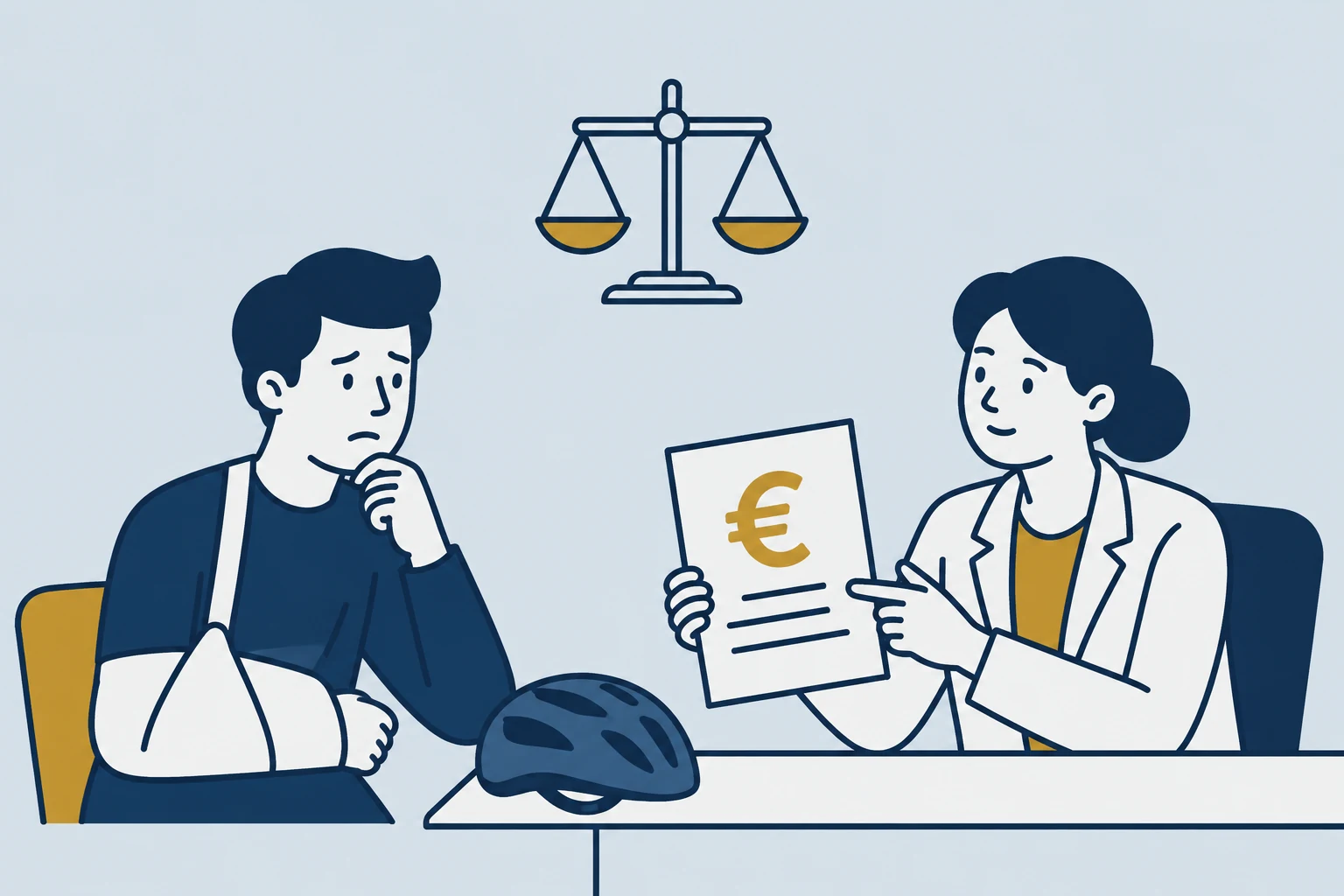
Discuss your situation with Arslan Advocaten. Let us know straight away if a time limit is approaching.
Your personal injury case starts with three questions
What happened, who can be held legally responsible for it and what consequences does the incident have for you? These questions must be answered separately. A serious injury does not in itself prove liability. Conversely, limited visible damage does not mean that the consequences for work, studies or the household are minor.
An initial assessment therefore starts with the facts. Describe the incident in your own words and make clear what you know yourself and what you heard from others. Keep photos, reports and contact details of witnesses. A later summary is useful, but does not replace the original documents. Especially where there are differing accounts of the accident, the first messages can be important.
We also discuss your short-term goal. Do you mainly have questions about a rejection, are you unable to pay costs or is there a proposal to settle everything? The right next step depends on that. General information about personal injury and liability helps with preparation, but your documents determine the assessment.
Cyclists, pedestrians and passengers after a collision
In a road traffic accident, it makes a difference how the parties were taking part in traffic. Age, behaviour, insurance policies and circumstances may also be relevant. Do not agree to an apportionment of fault without advice just because the other party has written it on the accident report form. Record what you agree on and which parts you believe are incorrect.
For cyclists and pedestrians, the consequences can go beyond repairing or replacing belongings. Think of limitations when travelling, studying or working. Note which usual activities you can no longer manage and which extra help is needed. Describe this factually, for example by comparing your normal week before and after the accident.
As a passenger, you may be in a different position from the drivers who are arguing about fault. Pass on details of all vehicles and insurance policies involved. Where there are several parties, it must be examined where the claim can best be submitted. You do not have to choose that route yourself on the basis of a telephone message from one insurer.
Injury during studies, an internship or temporary work
For someone who is studying, an injury can lead to missed classes, postponed exams or a delayed internship. So collect not only medical information, but also the course schedule and correspondence about adjustments or postponement. Make clear which consequence was caused by the incident and which other factors may play a role.
In the case of an internship or temporary employment, the legal relationship must first be examined. Who gave instructions, at which location did you work and what arrangements existed regarding safety? The name of an agreement does not always give the full answer. Send the internship agreement or employment contract as well as the incident report and relevant messages.
Study delay is not the same as every missed lecture. The assessment of damage concerns specific consequences and a substantiated connection. Describe which measures were tried to limit the delay. An adjusted programme or extra support can affect how the situation recovers and the calculation of the remaining damage.
Working, recovering and loss of income
Anyone who can work less after an accident may have to deal with various flows of money: wages, benefits, insurance payments and possible compensation. These must be looked at together. Fewer hours worked do not always translate directly into the same amount of lost income. At the same time, future limitations may be relevant while your current wages are still being paid.
Keep payslips, annual statements and arrangements about hours, allowances and contract extension. For self-employed work, turnover, costs and profit are different concepts. Comparing only the turnover before and after the incident can give a misleading picture. Replacement costs and missed assignments also require verifiable substantiation.
An accident at work can also raise questions about reintegration and the employment relationship. Let us know if you receive a proposal to end your employment or if your contract is coming to an end. The handling of the personal injury claim must be aligned with your position under employment law; arrangements about work must not be assessed separately from the consequences for income.
Medical information: targeted and handled with care
For the file, it must become clear which symptoms and limitations exist and what the possible connection is with the incident. Medical expertise may be needed for this. A lawyer does not make a diagnosis. We discuss which information is relevant and how it is obtained and assessed with due care.
Do not send your full medical history unrequested to every party involved. First discuss the purpose and scope of a request for information or an authorisation. The file must be sufficiently substantiated, but sensitive information should not be distributed widely without necessity. Keep an overview of which documents you have provided to whom.
With symptoms that cannot easily be seen on a scan, a careful description of how they develop remains important. Note changes, treatments and limitations in your daily functioning. There is no single document that proves the connection in every case. The coherence of the information and any expert examination can be decisive.
Making the damage to your daily life visible
In addition to income, help with the household, personal care, transport and out-of-pocket payments can play a role. For each item, make clear what was normal before the incident, what is different now and which costs or efforts are connected with it. Keep track of compensation received separately. This prevents uncertainty about what is still outstanding.
Help from a partner or family member is not always visible in invoices. So record which tasks are taken over and roughly how much time that takes. This is no guarantee that every hour stated will be compensated. It does, however, provide a factual basis for assessing whether and how the help belongs in the calculation of damages.
For non-pecuniary damage, compensation for pain and suffering may be at issue. The assessment depends on your injury and its consequences. Comparable judgments can help, but an online table of amounts does not replace an individual assessment. We discuss which consequences need to be substantiated and which expectations are realistic.
If liability is disputed
Ask for a written explanation of a rejection and keep the underlying reports. The discussion may concern how the accident happened, the applicable standard, contributory negligence or the connection between the accident and the symptoms. Each of these subjects calls for different information. Simply stating the same amount of damages again usually does not resolve a dispute about liability.
A hypothetical example: after a fall, the party held liable says that the situation was clearly visible. The injured party argues that a warning was missing. Then the layout, photos, circumstances and available statements, among other things, must be examined. The fact that someone fell does not yet determine the outcome. This example shows why a specific analysis of the file is needed.
When consultation reaches a deadlock, we discuss the options of additional evidence, an expert or proceedings. The Dutch judiciary (Rechtspraak) explains which procedures in personal injury cases exist. The type of dispute, the financial interest and the litigation risk determine which route may be appropriate. Litigation is not an automatic next step after every rejection.
Assessing an advance payment or final settlement
An advance payment is an interim payment. Substantiate which damage already exists and keep track of what payments are deducted from. In the meantime, there may still be discussion about liability or other components. So also have the accompanying text checked; the label on a payment does not always say everything about the intended arrangement.
A final settlement has a different purpose: closing the file in whole or in part. Check which damage, future uncertainties and any reservations are included in the agreement. Especially where treatment is still ongoing, a return to work is uncertain or studies have been delayed, a quick conclusion can have consequences that are difficult to remedy later.
Negotiations do not remove the need to monitor time limits. Limitation and the preservation of rights must be assessed separately. So also pass on older correspondence and earlier arrangements. It is important to know when parties were held liable and what was previously recorded in writing.
Assistance and costs for clients from Leiden
At the intake, we record the work you want us to do and the funding. Under certain conditions, reasonable extrajudicial costs can be recovered from a liable party. Where liability is disputed, external investigations are needed or proceedings are brought, other cost risks may apply. Ask in advance which items are covered by the arrangement and which must be approved separately.
Legal expenses insurance or subsidised legal aid may be relevant in some cases. The conditions must first be checked. There is no general promise that every personal injury case is free of charge. The question of who instructs and pays an expert should also be on the table in advance.
From Leiden, you can get in touch through our office in The Hague. Give a brief description of the accident, the date and your most urgent question. We then discuss which documents are needed for the initial assessment. If travelling or long consultations are difficult because of your injury, you can tell us straight away.
Frequently asked questions about personal injury in Leiden
Can study delay form part of my personal injury claim?
That can be examined. You must substantiate the delay, the connection with the incident and the financial consequences. Keep information from your educational institution and arrangements about adjustments.
The insurer is asking for a medical authorisation. Do I have to sign?
Have it assessed which information is being requested, for what purpose and to whom it will be provided. A targeted and appropriate authorisation is something other than giving unlimited access to medical data.
Do I have a claim if I am still receiving my full wages?
Possibly, because damage can consist of several items. Future consequences may also be relevant. Other compensation and the actual damage must, however, be processed carefully.
Can I switch if my file is already being handled elsewhere?
That can be discussed. We look at the existing file, arrangements and any costs before agreeing to take over the case. Do not terminate your current assistance until the consequences are clear.
Does the accident have to have taken place in Leiden?
No. State where the incident took place and who is involved. Handling through The Hague is tailored to the legal and practical circumstances of your case.
Request an assessment of your situation. We will discuss the next steps and the cost arrangements.