



After an accident, your recovery, your work and your finances can all come under pressure at the same time. Arslan Advocaten helps clients from Zoetermeer to assess liability and compensation. Your case can be handled through our office in The Hague. We discuss what happened, which damage is plausible and which steps are needed at this point.
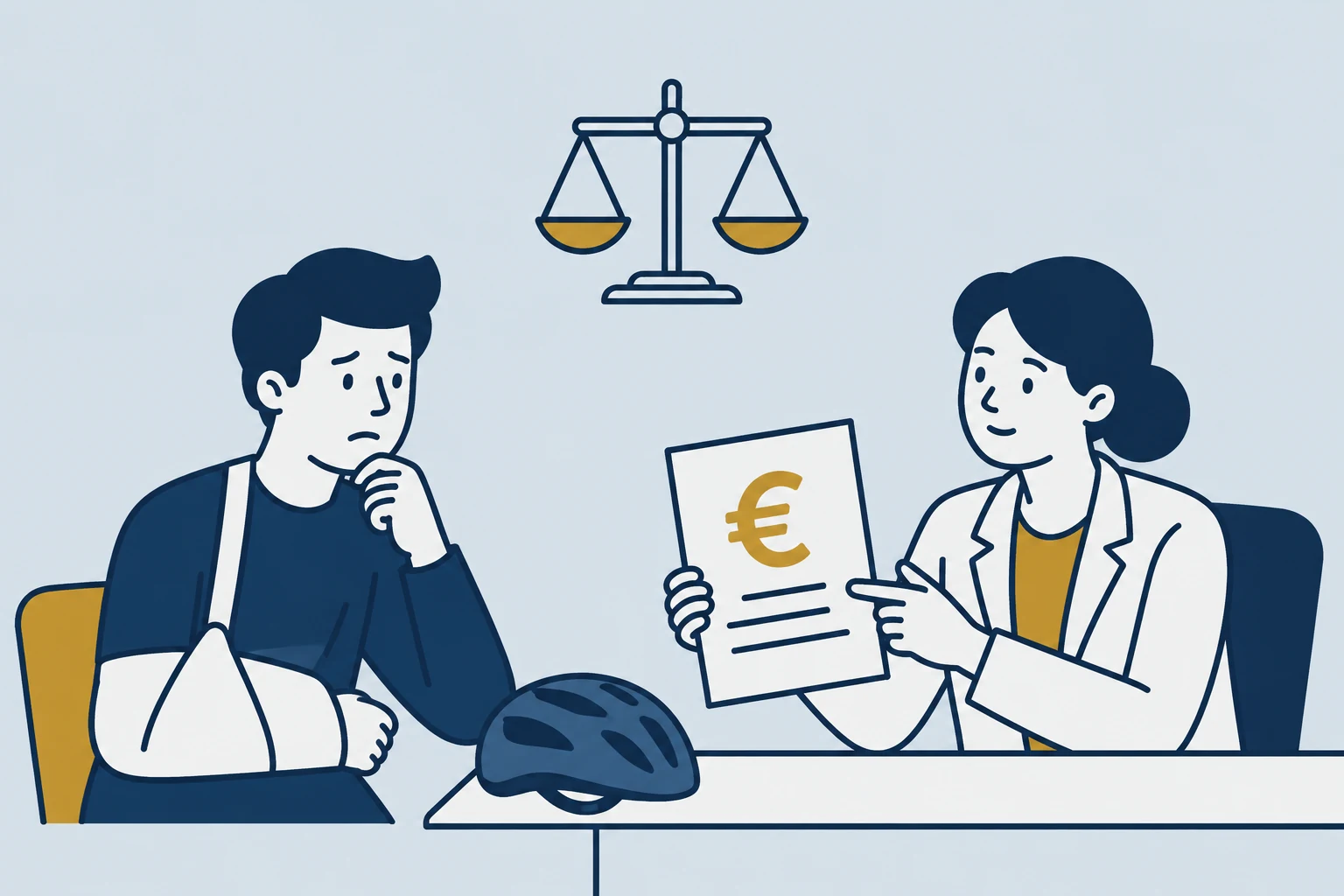
Discuss your situation with Arslan Advocaten. Let us know straight away if a time limit is approaching.
Personal injury in Zoetermeer: where do you start?
An accident does not automatically give rise to a right to reimbursement of all costs. First it must become clear who is liable and what connection exists between the accident, your symptoms and the damage. That examination sometimes takes place while you are still being treated. You therefore do not need to wait for a full recovery before asking for legal advice.
Make a short timeline for the first meeting. Note the date, the people involved, what you saw yourself and when symptoms arose. Keep original photos, messages and forms. Have you received a letter from an insurer? Then also send the attachments: they may state which facts the insurer acknowledges and which are still in dispute.
In a collision, an accident at work or a fall caused by a possibly unsafe situation, different liability rules apply. The name of the incident is therefore not enough to determine your prospects. We help to separate the relevant facts from assumptions and make clear which information is still missing.
The first days: care, evidence and an overview
Medical help and recovery come first. Describe to your healthcare provider as specifically as possible which symptoms you are experiencing and when they started. A legal file does not replace a medical assessment. If symptoms develop later, record what changes and discuss this with the person treating you.
Simple details are often important as evidence: names of witnesses, damage to clothing or a bicycle, photos of the situation and correspondence about the incident. A photo of only the damage says less about how the accident happened than an overview photo. So keep both if you can take them safely. Ask witnesses what they observed themselves; do not fill in their memory for them.
Keep an overview of costs from the start, with the date, a description and the supporting document. Think of travel to treatments, out-of-pocket payments and help needed at home. Also include help from family. Whether such items qualify for compensation and how they are calculated requires a separate assessment. The absence of an invoice does not mean you should leave the help out of the overview altogether.
Who pays after a road traffic accident?
After a road traffic accident, how it happened, the road behaviour and the position of the parties involved are examined. A cyclist, pedestrian, passenger or driver does not always have the same legal position. Possible contributory negligence and the insurance policies in place may also be relevant. A signed accident report form is useful, but does not always constitute the full evidence.
Give us both the front and the back of the form and any later statements. Also tell us whether there is a police investigation or whether camera footage may exist. Footage may only remain available for a limited time. Ask for advice in good time about securing it; do not collect footage or personal data yourself to which you are not allowed access.
Do you live in Zoetermeer and did the accident happen elsewhere, for example on the way to work? Then the case can still be handled through our office in The Hague. Your place of residence is not the only connecting factor for liability or for the competent court. In the case of an accident abroad, we first look at which law and which claims settlement route are relevant.
A workplace accident also calls for attention to your income
In the case of a workplace accident, it matters what work you were doing, under whose direction and with which instructions or equipment. Collect the incident report, the names of those present and correspondence with your employer or employment agency. Do not sign a statement that, in your view, gives an incorrect account of events.
Your personal injury claim and your employment relationship can affect each other. For example, you may be in discussions about reintegration while a liability insurer is still investigating. A proposal to end your employment can then have consequences for your income and your damage. Have such arrangements looked at together. A quick solution in one area can make another part of the file more complicated.
Record which work you did before the accident and what changed afterwards. Distinguish between fewer hours worked, lower income and extra effort to keep up the same work. Those are different facts. With varying shifts or self-employed work, a comparison over several periods is often more informative than a single payslip or invoice.
Which damage can be examined?
The calculation of damages is geared to your personal situation. Possible components are medical costs not reimbursed elsewhere, travel costs, loss of income, necessary household help and non-pecuniary damage. For each item, the legal basis, the connection with the accident and the amount must be examined. The same bill cannot simply be recovered twice.
Future damage is not only about what is missing from your bank account today. Limitations can affect your career, education, caring responsibilities and household. Realistic scenarios must be distinguished from uncertain expectations. Substantiation with information from before and after the accident helps to make that discussion concrete.
Non-pecuniary damages are a separate component. An amount from another case is not automatically appropriate for your injury. The nature and duration of the consequences and the circumstances of your own case are relevant. We discuss which information is needed for a defensible calculation, without promising an outcome in advance.
Advance payment, recovery and final settlement
An advance payment can provide financial breathing space while the damage has not yet been finally established. For this, liability, the available substantiation and the insurer’s position must be examined. A request works better when it is clear which costs have already been incurred, which payments have been received and what shortfall remains.
A final settlement deserves extra attention if your recovery is still uncertain. With a final discharge, you generally close off claims within the scope of the agreement. So check which future consequences have been taken into account and whether a reservation is necessary and achievable. The wish to close a file is understandable, but the consequences of the wording must be clear.
A hypothetical example: after a collision, someone partially returns to work and receives a final offer. The current travel costs are straightforward, but it is still unclear whether a return to the old position will succeed. It must then first be discussed how that uncertainty is dealt with in the settlement. This example is not a prediction for your case.
What if the insurer does not cooperate?
A slow-moving file can have various causes. Sometimes a medical opinion is missing; sometimes liability is disputed or calculations differ. Ask for a specific explanation and an overview of the outstanding points. That shows whether additional information, consultation or a legal step is the most logical route.
In a clearly defined dispute, proceedings can sometimes help to move negotiations forward. However, a partial dispute procedure (deelgeschil) is not suitable for every file that has reached a deadlock. The contribution to a solution, the nature of the dispute and the costs must be weighed up. The Dutch judiciary (Rechtspraak) explains procedures in personal injury cases.
Time limits require separate attention. Do not assume a single fixed limitation period for every situation and do not assume that ongoing contact preserves all rights. Have it assessed whether and how a claim must be safeguarded in time. So forward a letter in which liability is rejected as soon as you receive it.
Costs and assistance from The Hague
During the intake, we discuss the work and the cost arrangements. Where there is liability, reasonable costs of extrajudicial assistance can, under certain conditions, be recovered from the liable party. That does not mean that every case, every item of lawyer’s costs or every procedure is automatically free of charge. Ask how disputed liability, expert costs and any litigation risk are dealt with.
We also look at whether insurance or subsidised legal aid may be relevant. The options depend on conditions and personal circumstances. An arrangement with an external expert or lawyer must fit within the chosen funding; do not assume in advance that an insurer will reimburse everything afterwards.
For clients from Zoetermeer, coordination takes place through Arslan Advocaten in The Hague. When you make your request, indicate whether travelling is difficult because of your injury, so that a suitable way of consulting can be discussed. The general personal injury page provides more background. For your own case, it is above all the facts, documents and current questions that are decisive.
What should you bring to the first meeting?
Start with the date of the accident, the contact details of the parties involved, letters from insurers and your main question. Add a brief overview of the consequences for work and home. Also state what has already been paid or offered. This prevents a proposal from being assessed without knowledge of the earlier arrangements.
You do not need to send a complete medical file on your own initiative. First discuss which information is needed and how it is requested and shared with due care. Let us know straight away if a time limit is approaching or if you need to assess a settlement agreement. An urgent initial assessment does not have to wait until all receipts have been collected.
Frequently asked questions about personal injury in Zoetermeer
Can I get in touch before liability has been acknowledged?
Yes. That is precisely when it can be examined which legal basis and which evidence are needed. We discuss in advance which assistance is possible and which cost arrangements apply.
What if my symptoms only become clear later?
Record how they develop and discuss your symptoms with the person treating you. For the claim, the connection with the incident must be examined; symptoms that arise later are neither automatically excluded nor automatically proven.
Do I have to accept an offer from the insurer?
Have both the amount and the conditions assessed. Relevant points include which damage has been taken into account, which uncertainties exist and which claims you close off with the settlement.
Can my case be handled from Zoetermeer?
Yes, through our office in The Hague. At the intake, we discuss how we will stay in contact and which documents are needed for the initial assessment.
How long does a personal injury case take?
That depends on factors including recovery, liability and the investigations required. We discuss the next step and the outstanding points; a fixed end date often cannot responsibly be given in advance.
Request an assessment of your situation. We will discuss the next steps and the cost arrangements.