
Changing a first name can be an important step for people who no longer feel connected to their current first name or want to correct an error. Whether for personal, cultural, psychological or legal reasons, a first name change can improve a person’s self-confidence and well-being. At Arslan Advocaten, we guide you through the entire process of applying for a first name change, from preparation to the final approval by the court.
Why apply for a first name change?
There are various reasons why someone would want to apply for a first name change. Some of the most common reasons are:
- Psychological or emotional reasons: Some people do not feel connected to the first name they were given at birth. This can be due to negative associations, unpleasant memories, or bullying.
- Religious belief: People who convert to another faith sometimes want to change their first name to better align with their new religion.
- Gender transition or non-binary identity: For people who have undergone a gender transition or identify as non-binary, a new first name can help affirm their identity.
- Spelling errors or incorrect registration: Sometimes errors are made in the birth registration, such as spelling mistakes in the first name. This can be a reason to correct the first name.
- Cultural adaptations: People who have moved to the Netherlands may wish to change or adapt their foreign first name to better fit the Dutch language or culture.
The legal process for a first-name change
In the Netherlands, a change of first name must proceed via an official legal procedure. This process consists of several steps and requires the involvement of a lawyer. Below you will find the full explanation of the procedure:
1. Intake and preparation
The first step is to discuss your personal situation and the reasons why you want to change your first name. This is an important part of the procedure because the judge will assess your motivation. A lawyer will help you clearly express your arguments and draft the necessary documents.
2. Filing the petition
Your lawyer will file a petition with the court on your behalf. In this petition, the lawyer explains why you want to change your first name. The reasoning must be well substantiated so that the judge gains insight into your personal reasons for the name change. The petition must clearly state the desired first name and explain why this first name suits you.
3. Assessment by the court
After the petition has been filed, it is reviewed by the court. The judge will look at the valid reason you have provided and will take the situation into consideration. The judge may ask additional questions or request further explanation.
Often, the court handles the procedure in writing. In some cases, however, the judge may decide that a hearing is necessary, for example when the petition raises questions or when extra information is needed to reach a well-considered decision. You are not required to attend this hearing, but if you stay away, you will have no opportunity to explain or answer any questions from the judge orally. This may influence the decision of the judge.
In some cases, the judge may also request advice from the municipality where you are registered or from the public prosecutor. This mainly occurs in complex or exceptional situations, such as when the change may have a significant impact on others, for example in child or family law matters.
What if the other parent or an interested party disagrees with your request?
It may happen that another parent, or someone else with a direct interest in the first name change, cannot agree with your request. In such a case, this person has the right to object during the procedure. This is generally referred to as “filing a defense.”In that case, the judge will also take this person’s position into account in the assessment. Your lawyer can assist you in preparing a response to the objection. It is important to know that the judge always carefully balances the interests involved, weighing both your arguments and those of the opposing party.As a result, the process may take a bit longer, and the judge may ask additional questions or request supplementary documentation. Are you unsure whether someone will object? Then it is wise to take this into account already during preparation, so you are not caught by surprise.Is a court hearing always required for a request to change a first name?
4. The judge’s decision
After the court has reviewed the case, the judge will make a decision. This process generally takes several months, depending on the complexity of the case and the court’s workload. If the judge approves the request, the decision will be sent to you and your lawyer.
5. Registration in the municipal personal records database (BRP)
When the court approves the name change, the new first name must be registered in the municipal personal records database (BRP). Your birth certificate will be amended and your new name officially recorded. This is an important moment, because from that point on your new first name will be used on all official documents, such as your passport, identity card and driver’s license.
What are the requirements for a first name change?
Although you are in principle free to change your first name, you must meet a few legal requirements. The most important are:
- Valid reason: You must have a good and valid reason to change your first name. A judge will not simply approve an application without a compelling justification.
- Minimum age: If you are under 18, your parents or guardian can submit the request for a first name change. A child’s right to be heard is not the same as a general right to veto a first-name change. A child aged twelve or over is in principle given an opportunity to express their views under Article 809 of the Dutch Code of Civil Procedure. Current court practice in many family cases also provides for invitations from age eight; the precise procedure should be checked for the case concerned. The court weighs the child’s views together with the other circumstances. Who may submit the application and whether both parents must be involved also depend on parental responsibility.
- Legal steps through a lawyer: For a first name change you need a lawyer. Only a lawyer can file a petition with the court on your behalf.
Frequently asked questions about first name change
How long does a first name change take?
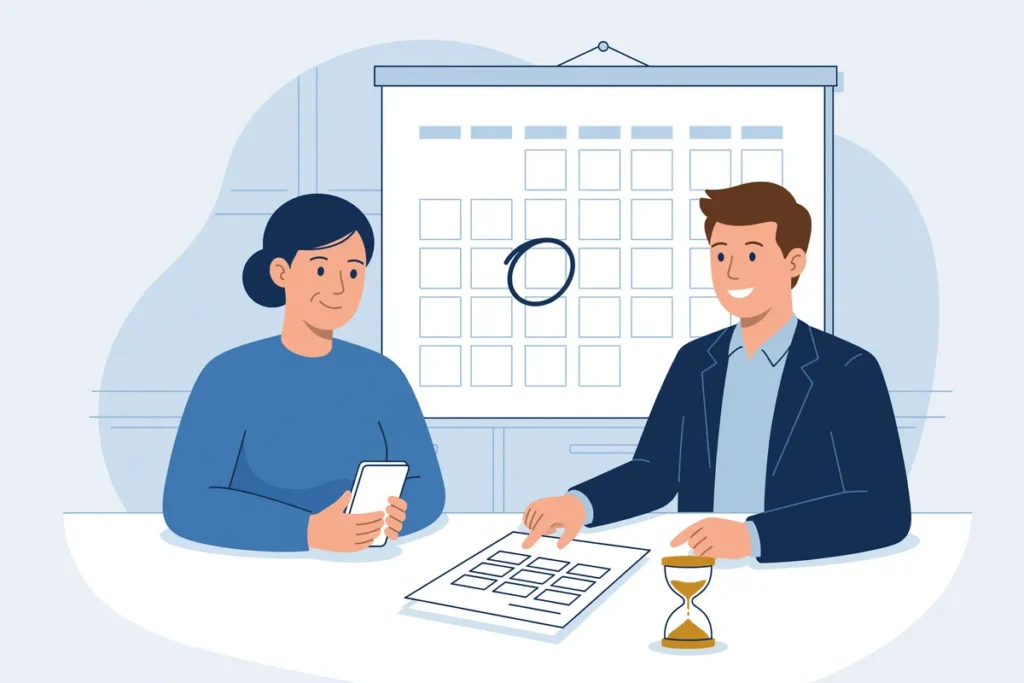
The procedure for a first name change takes on average between 2 and 6 months. The court will usually issue a decision within two months, but in some cases the procedure may take longer, for example if advice needs to be sought.
Can I change my name if I live abroad?
Yes, it is possible to change your first name if you live abroad, as long as you have Dutch nationality. In that case, the procedure goes through the Dutch court, and after approval the change is recorded in the BRP.
Can I change my child’s first name?
Yes, it is possible to change the first name of a child under 18. Both parents or guardians must agree to the change, unless one parent has custody. A child’s right to be heard is not the same as a general right to veto a first-name change. A child aged twelve or over is in principle given an opportunity to express their views under Article 809 of the Dutch Code of Civil Procedure. Current court practice in many family cases also provides for invitations from age eight; the precise procedure should be checked for the case concerned. The court weighs the child’s views together with the other circumstances. Who may submit the application and whether both parents must be involved also depend on parental responsibility.
What should you do if you want to change your surname?
Do you want to change not your first name but your surname? Then please note that this process is different. Unlike a first name change, the request to change your surname does not go through the court, but via Justis.Justis handles applications for surname changes on behalf of the Minister for Legal Protection. Here you can submit an application for yourself as well as for a minor child. The procedure requires a separate process and different justifications than for a first-name change. For example, in situations where your current surname has undesirable associations or for the protection of the child.On the Justis website you will find clear information, application forms and conditions for both adults and minors. This way you will know exactly which documents and reasons are required to apply for a change of your surname.
Why Arslan Advocaten?
At Arslan Advocaten we understand that changing your first name is a personal and important step. Our lawyers have many years of experience with first-name changes and guide you throughout the entire process. We ensure that your application is carefully prepared and submitted, so that you can adopt your desired first name with confidence.
Do you have questions or need assistance?
We are ready to answer all your questions and support you at every step of the procedure. On our contact page, you will find extensive information about frequently asked questions regarding first-name changes. In addition, we are happy to explain how you can easily reach us for personal advice.
Would you like to know more about changing your first name? Then contact us today for a no-obligation consultation.
Frequently Asked Questions
What are some common reasons for applying for a first name change in the Netherlands?
People often seek a name change due to psychological reasons, religious conversions, gender transition or non-binary identity, spelling errors, or cultural adaptations. These reasons help align their name with their personal identity or correct registration mistakes.
What is the legal process for changing a first name in the Netherlands?
The process involves an intake and preparation, filing a petition with the court, and an assessment by a judge. A lawyer is typically involved to help draft the necessary documents and present your case to the court.
Do I need a lawyer to change my first name in the Netherlands?
Yes, engaging a lawyer is advisable as they assist in preparing your case, filing the petition, and ensuring that your reasons are clearly presented to the court for a smooth process.
How long does it usually take for a first name change to be approved in the Netherlands?
The duration can vary depending on the court’s review process and whether a hearing is required, but generally, the procedure can take several weeks to a few months once all documents are submitted and the case is reviewed.