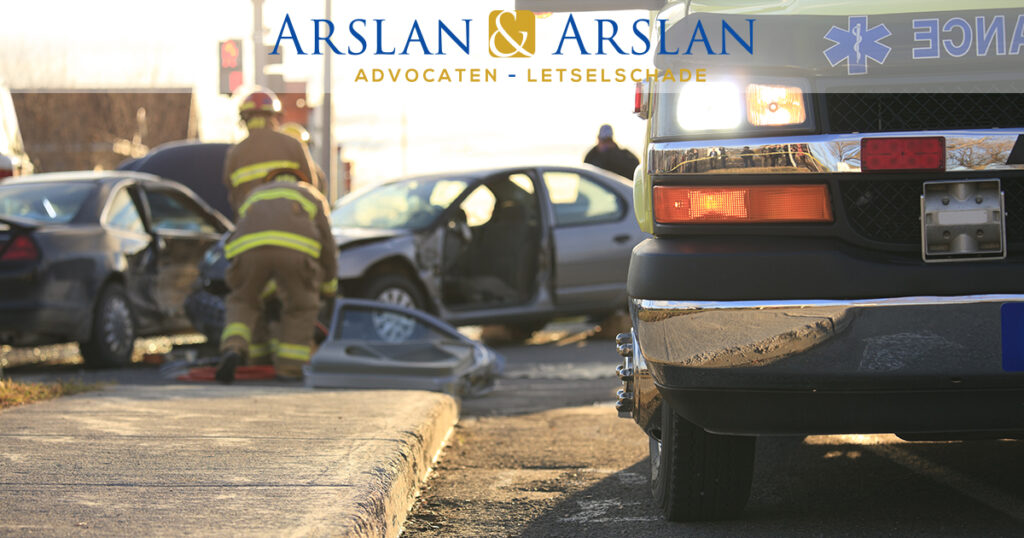
When you have suffered personal injury due to an accident, you often face not only financial losses, but also pain, emotional distress, and limitations in your daily life. The compensation for this non-material suffering is called pain and suffering compensation.
But how is pain and suffering compensation actually calculated, and what are you entitled to?
In this article, Arslan Advocaten explains what pain and suffering compensation is, how it is determined, and how you can claim the maximum compensation.
What is pain and suffering compensation?
Pain and suffering compensation is compensation for non-material damage: it compensates for pain, grief, stress, and loss of enjoyment of life as a result of an accident or unlawful act.
So it does not concern concrete financial costs such as medical bills or loss of income, but rather the emotional and psychological consequences of the injury.
Why is pain and suffering compensation awarded?Pain and suffering compensation acknowledges the harm done to you, even though no amount of money can completely take away your pain. It is intended as a form of financial compensation for the injustice you have suffered, for example after a traffic accident, workplace accident, or another situation in which someone else is liable. This compensation underscores that your pain and grief are taken seriously.Often, when determining the amount of pain and suffering compensation, among other things, earlier comparable cases are considered, for example via the ANWB Smartengeldgids. This way you receive a fair and appropriate compensation for your non-material damage, always tailored to your personal situation.
You may be entitled to pain and suffering compensation in the following situations:
-
You have sustained due to someone else’s fault.There is
-
psychological injury, such as anxiety symptoms or PTSD.You are a victim of a
-
criminal offense, such as assault or a traffic accident.Next of kin
-
can receive compensation for loss of companionship if a loved one is seriously injured or dies.Witnesses
-
can claim shock damages when they suffer psychological injury from witnessing a serious accident.Is pain and suffering compensation tax-free?
A frequently asked question is whether you have to pay tax on pain and suffering compensation. Good news: pain and suffering compensation is considered compensation for non-material damage and is generally exempt from tax.You therefore usually do not need to declare the amount received to the Tax and Customs Administration. This means that you are entitled to the full compensation, without paying tax on the pain and suffering compensation.Note: if, on the other hand, you receive interest on the compensation for pain and suffering or invest the amount, this can indeed have consequences for your wealth tax (box 3). Unsure about your situation? Consult a tax advisor to be sure of where you stand.
Compensation for pain and suffering for next of kin and witnesses: affection damages and shock damages
Compensation for pain and suffering is not only intended for victims themselves. In some cases, close relatives or witnesses can also claim compensation for emotional harm.
Affection damages
When a loved one or family member is seriously injured or dies due to someone else’s actions, immediate next of kin can receive a fixed compensation.
These amounts are set by law and depend on the relationship to the victim.
Shock damages
Have you witnessed a serious accident up close and suffered psychological injury as a result (such as PTSD)?
Then you can also claim compensation for pain and suffering. The amount depends on the severity of the injury and the circumstances.
Read also: Liability for personal injury: what you need to know
How is pain and suffering compensation calculated?
Calculating pain and suffering compensation is not an exact science. There is no fixed formula: the amount is assessed individually per case.
Judges, lawyers, and insurers use the ANWB Smartengeldgids as a guideline.
The role of the ANWB Smartengeldgids
The ANWB Pain and Suffering Compensation Guide contains hundreds of court rulings in which pain and suffering compensation has been awarded.
When determining compensation, reference is made to similar cases in this guide — for example for whiplash, fractures or brain injury — so that your situation can be compared with earlier rulings.
This leads to greater legal certainty and consistency in the amounts of compensation.
💡 The Smartengeldgids is updated every year and is the most important reference source for judges, insurers, and personal injury lawyers.
Why is legal substantiation so important when claiming compensation for pain and suffering?
A successful claim for pain and suffering does not depend only on your story or the severity of the injury.It mainly comes down to solid legal substantiation.Only if you substantiate your damages properly and convincingly—with medical reports, witness statements, and references to comparable rulings from, for example, the ANWB Smartengeldgids—will you have a chance of getting the maximum amount you are entitled to.
- Judges and insurers assess claims critically and often ask for:
- Evidence of the nature and severity of your injury (medical records)
- Substantiation of the connection between the incident and your symptoms
- Documentation of psychological harm, if applicable
Comparisons with previously awarded compensation in similar situations
Without this file, a claim can easily be rejected or dismissed as unfounded. A thoughtful, well-substantiated approach—possibly with the help of a personal injury lawyer—significantly increases your chances of appropriate compensation.
Factors that influence the amount of pain and suffering compensation
The amount of your pain and suffering compensation depends on several factors:
1. The nature and severity of the injury
The more serious the injury, the higher the compensation.
| The table below provides an indicative range: | Injury category |
|---|---|
| Indicative amount | Slight injury |
| € 0 – € 800 | Minor injury |
| € 300 – € 2.125 | Moderate injury |
| € 1.500 – € 9.000 | Serious injury |
| € 8.000 – € 21.000 | Severe injury |
| € 19.000 – € 43.000 | Very severe injury |
| € 40.000 – € 76.000 | Exceptionally severe injury |
€ 70.000 – € 250.000
Note: these are guideline amounts; the exact amount depends on your personal situation.
What does each injury category entail?Slight injuryThis concerns temporary symptoms that may hinder you, but from which you generally make a full recovery. Think of bruises, contusions, abrasions, mild headaches or muscle soreness. The discomfort is real, but the consequences are usually limited.Minor injurySymptoms in this category often persist a bit longer—sometimes weeks to months. Examples include mild psychological symptoms such as traffic anxiety, scars in less visible areas, temporary incapacity for work, or limitations in household activities. You are still functioning, but not as before.Moderate injuryThis concerns injuries with a serious impact, such as a minor surgery, longer-lasting mobility restrictions, a short hospital stay, or permanent but limited symptoms (for example, a stiff neck). Recovery is possible, but the impact on your daily life can be considerable.Serious injurySerious injury often means prolonged medical treatment, loss of independence, or psychological suffering. Think of extended hospital stays, dependence on assistance, depressive symptoms, or no prospect of full recovery.Severe injuryThis involves very profound and permanent consequences, such as wheelchair dependence, severe and permanent disfigurement, admission to a clinic, or multiple physical or psychological injuries. In these cases, the damages are often complex and long-lasting.Very severe and exceptionally severe injury
In these categories, there is extreme and life-changing harm, often with permanent disability or loss of quality of life. The compensation can then increase significantly.
Your personal situation always determines the final amount of compensation. If in doubt, always contact a personal injury expert to discuss your situation.
2. The duration of recovery
Injuries with long-term consequences, such as chronic pain or permanent disability, result in higher compensation than temporary injuries.
3. The impact on daily life
When you can no longer work, play sports, or engage in social activities, this is heavily weighed when determining the amount.
4. Psychological harm
Psychological issues (such as PTSD or depression) can be just as impactful as physical injury.
These are also taken into account in calculating compensation for pain and suffering.
5. Age of the victim
For younger victims, the impact is often greater because they have to live with the consequences for longer.
6. Fault and circumstances of the accident
When the opposing party acted recklessly or intentionally, the compensation can be higher.
Why pain and suffering compensation in the Netherlands is lower than in other countries
The Netherlands traditionally has lower pain and suffering awards than countries such as Germany or the United Kingdom.Still, we see a gradual increase
: in recent years, judges have more often awarded higher amounts.
For example, in 2017, for a failed gallbladder operation € 30,000 was awarded, whereas ten years earlier € 20,000 was customary.
So the trend is upward, but the Netherlands remains more modest than abroad.
What is the litigation risk for pain and suffering compensation?A lawsuit always involves uncertainty — this is called the litigation risk
.
The judge ultimately determines the amount, and that can vary from judge to judge.To avoid this risk, people often opt for negotiation or amicable settlement
with the insurer.
-
The benefits of negotiating pain and suffering compensationMore certainty:
-
You know in advance what to expect.Less risk:
-
No surprises from unpredictable court rulings.Faster resolution:
-
No lengthy proceedings, but quicker clarity and payment.More influence:
Your personal situation and preferences count in the negotiation.Often you achieve via negotiation a faster and fair solution
without legal proceedings.
How can you claim compensation for pain and suffering?
-
You can claim compensation for pain and suffering if you have suffered personal injury caused by someone else. This can apply to:Traffic accidents
-
(car, bicycle, motorcycle)
-
Workplace accidents
-
Medical errors
Assault or aggression
It is possible to claim compensation for pain and suffering from the other party yourself, but in practice this almost always goes through a personal injury specialist or lawyer. This way you avoid missing out on important compensation and the negotiation with the insurer is conducted expertly.
Our personal injury lawyers
-
help you with:
-
Determining liability
-
Calculating your compensation
-
Collecting medical and legal evidence
Negotiating with the other party’s insurer
With professional legal support, you are in a stronger position and can be sure that your interests are optimally protected.
How long does it take for pain and suffering compensation to be paid?
- The speed at which pain and suffering compensation is paid varies by case. This process depends on several factors:Admission of liability
- : Only once the other party admits liability does the settlement process begin.Medical situation
- : Your medical issues must be stable or fully clear. Otherwise, the final damage cannot be properly determined.Evidence and processing
: Sometimes the insurer asks for additional information or reports, which can also take time.
It is quite common for an advance payment to be made during the process. The final payment usually follows once it is clear how serious the injury is and all items of damage are clear. Patience is often required; in some cases the resolution takes several months, but with complex injuries it can take longer.
Why choose Arslan Advocaten?At Arslan Advocaten
we understand how far-reaching personal injury is.Our experienced attorneys and NIVRE-registered experts ensure that you the maximum pain-and-suffering compensation
-
receive.Always free legal assistance
-
— we recover our costs from the liable party.Expert guidance
-
— legal and medical expertise under one roof.Speed and commitment
-
— we ensure that your case is handled efficiently.High success rate
— we know insurers’ tactics and ensure maximum compensation.
Also read:👉
The benefits of legal assistance in personal injury cases👉
Step-by-step plan: claiming personal injury compensation after an accident
Contact us today for free advice
Would you like to know how much pain and suffering compensation you can claim, or do you need help recovering your personal injury losses?
Contact Arslan Advocaten.