Blog
In this knowledge base our lawyers explain how Dutch law works in practice: when you are entitled to compensation, which time limits apply, and what an insurer, employer or landlord may and may not ask of you. Each article answers one concrete question and names the statutory provisions it rests on, so you can check the basis for yourself.
Use the filters to read by area of law: personal injury, employment law, tenancy law, insurance law, business law, family law, criminal law and administrative law. If your own situation is not covered, or you want to know what an article means for your case, contact us for an initial assessment.

Liability and payment are two separate questions. Which other parties and policies may exist, and how Article 7:954 of the
After an accident in the Netherlands, Dutch law in principle continues to apply. What to arrange before you leave: an
Employment contract, accommodation and damages claim are three separate routes. What the Good Landlordship Act provides and why nobody may
A signed form does not prove that you understood the instruction. What the Working Conditions Act requires in terms of
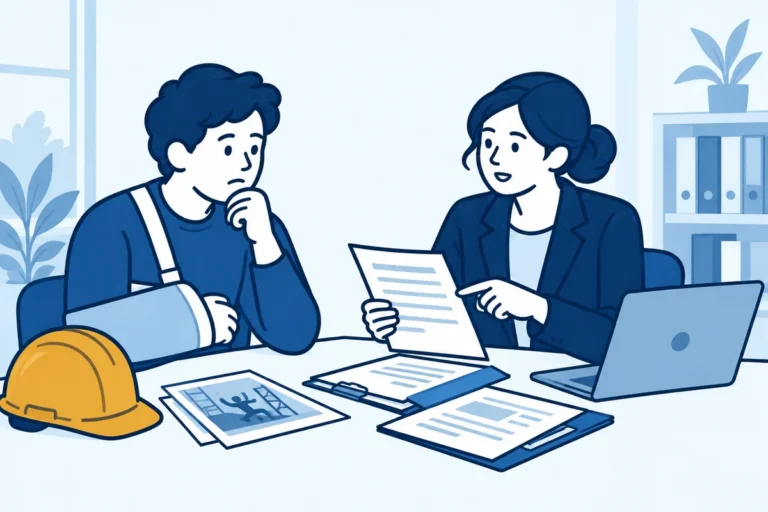
Even without witnesses, you can hold your employer liable. What you must substantiate, what your employer must prove and which
Force majeure arises where the other party fails to perform because of a cause for which it cannot be blamed.
Did you conclude a contract on the basis of incorrect information? You may then be able to annul it on
As a consumer, you can in principle cancel an online purchase within fourteen days without giving a reason.
If a product you bought breaks or does not conform, the shop must repair or replace it free of charge.
Since 16 July 2026, you may only use terms such as ‘sustainable’ or ‘climate neutral’ with specific substantiation.
Arslan Advocaten has 28 lawyers. What this means for personal injury victims and for individuals in a conflict about work,
When terminating a commercial agency agreement, you need to look separately at the notice period, outstanding commission, possible damages and
A failed IT project does not automatically entitle you to a refund of every invoice.
In a dispute with your franchisor, your position is not determined by the contract alone.
Terminating a distribution agreement takes more than a notice letter.
When a bv is wound up through turbo liquidation, an unpaid invoice does not automatically disappear.
A prejudgment attachment can secure recovery options while there is not yet a final ruling on your business claim.
A contractual penalty is not automatically payable as soon as the other party names an amount.
With a valid retention of title clause, you as a supplier can remain the owner of delivered goods until the
A right of retention gives you the right to keep a customer's property until payment is made.
A business payment claim is often time-barred five years after it became due and payable.
You can sometimes set off a business invoice against a claim you yourself have against the other party.
You may sometimes temporarily suspend work or payment if your business counterparty fails to perform its obligations.
A rejected prior authorisation means that your health insurer does not grant the requested approval for reimbursement. Learn how to