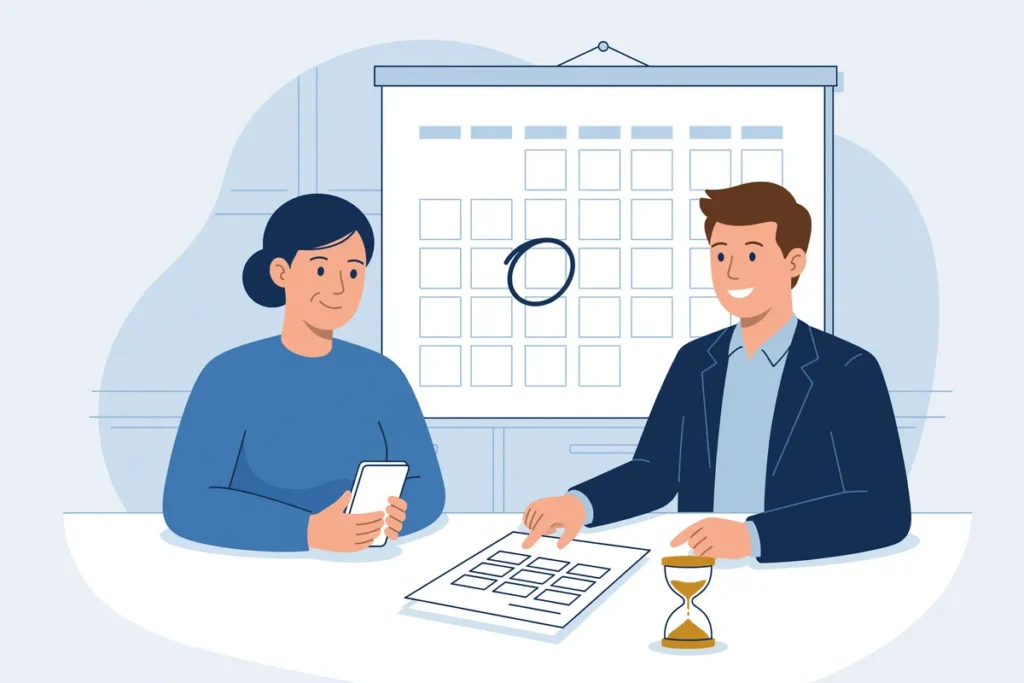
Is your ex paying no maintenance, or too little? First check what amount is owed, which payments have been received and whether you have an enforceable court decision. You can then make a targeted choice between a payment request, help from the LBIO (the Dutch National Maintenance Collection Agency), a bailiff or proceedings to have maintenance determined. A dispute about contact with the children does not give anyone a general right to withhold maintenance.
Written by Öznur Batur, attorney at Arslan Advocaten, practising in personal and family law. Registered in the specialisation register of the Netherlands Bar (Nederlandse orde van advocaten) for personal and family law and criminal law. Last updated: 19 September 2026. General information is not legal advice on your own situation.
Quickly drawing up an overview helps more than repeatedly asking when the money will arrive. Below you can read how to substantiate the arrears, how the various routes differ and what to do if the paying party says they can no longer pay. Child maintenance and spousal maintenance have similarities when it comes to collection, but they do not always have the same beneficiary or end date.
Start with the existing agreement or decision
Look up the court order, the divorce settlement (convenant) and any later amendments. Do not just read the amount, but also the start date, payment date, indexation and conditions. Sometimes a divorce settlement is attached to or incorporated into the court order. Sometimes there is only a signed agreement between the parties. That difference is important for whether you can enforce directly.
A bailiff cannot immediately attach wages on the basis of any e-mail. That requires a suitable enforceable title (executoriale titel). A court decision can provide such a title; an ordinary private agreement usually cannot. If in doubt, have it assessed exactly what your document allows.
Also check whether the amount was later validly changed. An old court order and a recent written payment agreement can exist side by side. Anyone who only reads the oldest text may present incorrect arrears. So keep the complete timeline of agreements and payments.
Draw up a month-by-month breakdown
A good overview shows, for each month, the amount owed, the payment received and the remaining difference. State indexation separately and link receipts to bank statements. Also note when the payment should have been made. This prevents a late payment from being treated as entirely missing.
| Item | What do you record? |
|---|---|
| Basis | Court order or agreement, with date and case number |
| Period | Each month to which the arrears relate |
| Owed | Base amount plus applicable indexation |
| Received | Amount, date and payment reference |
| Difference | Outstanding balance per month and in total |
Separate child maintenance and spousal maintenance if both are owed. With several children, a breakdown per child may also be necessary, especially when a child turns eighteen or an obligation ends. A round total without a calculation makes the discussion needlessly difficult.
Check the statutory indexation
Arrears can arise because the nominal amount is paid but the annual indexation is not. Check whether statutory indexation applies and whether it has been validly excluded. Use the official percentages for each year concerned and the correct starting amount.
Paying the same amount for several years does not automatically prove that you have waived indexation. At the same time, limitation periods, agreements or other circumstances may affect whether it can still be collected. So do not let uncertainty persist for years.
The indexation calculation is something different from a new calculation of the ability to pay. If the paying party says their income has fallen, that statement does not by itself replace the applicable indexation or the existing title. A structural adjustment requires a different step.
Send a clear request for payment
A businesslike message states the basis, the arrears, your calculation and a specific date for a response. Enclose relevant attachments and ask whether the other party can point to any factual error in the overview. Avoid reproaches about the relationship or parenting: they make the payment request less clear.
An example of an opening sentence is: ‘According to the court order of [date], the contribution for [period] after indexation amounts to [amount]. The attached overview shows the payments received. The outstanding amount is [amount]. Please pay this before [date], or explain before that date, with reasons, why you believe the overview is incorrect.’
Use this text as a starting point and adapt it to your document and circumstances. An additional payment reminder is not a statutory condition for enforcement in every case. Do not let sending it cause you to miss an important deadline or necessary urgent action.
When can the LBIO help?
The Landelijk Bureau Inning Onderhoudsbijdragen (LBIO) can collect maintenance subject to certain conditions. Collection by the LBIO is free of charge for the recipient. The agency assesses, among other things, the legal basis and the payment arrears. A young adult aged eighteen to twenty-one can also ask for help themselves if a parent pays nothing or not enough.
Check the current eligibility conditions when applying. The domestic route is not the same as a request with international aspects. The age of the arrears and the way in which the payment obligation was laid down may also be relevant. Do not assume that the LBIO can take over every old claim or every claim that was only agreed orally.
Where payments are made into a joint children’s account, the LBIO states that it cannot help with collecting them. That is a reason to have the exact payment arrangement examined, not to conclude that every claim lapses. Another legal route may be needed.
What happens when the LBIO collects?
After your application, the LBIO requests the necessary information and documents and investigates the payment obligation. It tries to get the payments going again. If further collection is needed, costs may arise for the person liable to pay. What the agency actually does depends on the file and the applicable rules.
Keep reporting all direct payments. If your ex transfers an amount in the meantime after all, the outstanding balance must be updated. Having two parties collect at the same time without coordination can lead to incorrect claims or unnecessary costs.
Also ask how new instalments are handled during the collection process. An arrangement for the arrears should not conceal the fact that the current monthly contribution is again going unpaid. So keep track of the historical balance and the current obligation side by side.
When is a bailiff appropriate?
With a suitable enforceable title, a bailiff can assess which collection measures are available. Think of service and, where the conditions are met, attachment of income or assets. Not all assets are easy to reach, and statutory protection rules limit the options.
Ask in advance which costs you may have to advance, which amounts can be recovered and what happens if the debtor has few assets to recover from. A title does not prove that sufficient money is actually available. A proportionate approach therefore also looks at the expected proceeds.
A lawyer and a bailiff have different roles. The lawyer can assess the legal basis, a dispute about amendment or proceedings. The bailiff can serve documents and enforce within the limits of their powers. For an effective file, the calculation, title and payment information must be consistent with one another.
No court determination yet?
If you only have oral agreements or an unclear written arrangement, the obligation may first need to be determined. Gather evidence of what was agreed and what has been paid in the past. Then have it examined whether a claim for performance of an agreement, a maintenance application or another route is appropriate.
A lawyer is required to file a maintenance application with the district court. The court will also look at need and ability to pay. The aim is then not only to claim an unpaid sum, but to obtain a sufficiently clear and legally appropriate payment obligation.
Discuss the desired start date expressly. A court has discretion in setting it, but retroactive effect is not an automatic right. Anyone who waits a long time without an application or a clear claim may end up in a more difficult position as regards evidence. See also calculating and changing child maintenance.
May the paying party set off costs?
A parent sometimes pays school fees, clothing or a holiday and then deducts that from the maintenance. That is not automatically permitted. The question is which costs the maintenance covers, what the parties agreed and whether the claimed set-off is legally possible.
A present for a child is in principle something different from paying the determined contribution. The same applies to additional expenses incurred voluntarily. A joint agreement on specific costs may, however, be relevant. So record whether a payment is additional or is to be deducted, and over what period.
Do not assume a general right to set off maintenance against every counterclaim. Restrictions and protection rules apply to claims relating to subsistence. Have the court order and the counterclaim assessed together before presenting a balance as final.
What if your ex can no longer pay?
A drop in income may be a reason for consultation or amendment, but it does not change an existing decision by itself. The paying party must substantiate the change and, if necessary, file an application for amendment. The recipient can ask for documents without thereby already agreeing to a reduction.
A reasonable temporary arrangement can prevent further escalation. In that case, state precisely whether only a deferral is being granted, whether an amount is being adjusted provisionally and whether a settlement will follow later. A brief arrangement such as ‘just pay what you can’ can cause many problems of interpretation afterwards.
In amendment proceedings, disputes may also arise about the effective date and any amounts overpaid. So do not let your own financial planning depend entirely on the expectation that the existing contribution will always remain unchanged. At the same time, you do not have to accept every claimed inability to pay without investigation.
Arrears, limitation periods and evidence
Do not wait indefinitely before collecting. Claims for periodic payments can become time-barred. Rules also apply to the enforcement of court decisions that can produce particular outcomes for periodic amounts. The correct period depends on the claim and the available title.
The limitation period can be interrupted under certain conditions. Not every informal message is sufficient for this. For older arrears, have it assessed which months are still claimable, which earlier letters are relevant and which new act of interruption is needed.
Keep original bank statements and dated messages. A summary drawn up later is useful, but does not replace the underlying data. Also check payments with an unclear description before claiming that they were not maintenance.
What changes when the child turns eighteen?
From the age of majority, the entitlement to the contribution towards living and study costs in principle lies with the child. Payment to the caring parent must then be properly coordinated with the young adult (jongmeerderjarige). Arrears from before and after the eighteenth birthday may concern different beneficiaries.
Involve the child in agreements and collection. A parent can offer practical support, but is not automatically authorised to handle all claims on behalf of an adult child. A clear authorisation may be needed for that support.
Studying is not a general condition for the maintenance obligation to exist up to the age of twenty-one. The child’s own income can, however, affect the amount. More on this can be found in child maintenance from eighteen to twenty-one.
Example: partial payment and disputed extra costs
In a fictitious case, Robin pays only part of the contribution for three months. Robin argues that sports clothing and a school trip have already been paid for the child. Alex draws up an overview with the court order, the indexed monthly amounts and the bank receipts.
This shows that one payment was initially overlooked. That is corrected. They then examine whether it was really agreed that the extra costs could be deducted from the contribution. A payment arrangement is discussed for the remaining balance, with separate agreements about the current contribution.
The example shows why an accurate calculation prevents both unjustified accusations and unjustified withholding. If consultation fails, there is a usable file for assessing collection.
A payment arrangement without new uncertainty
A payment arrangement may be suitable when the arrears have been established and payment in one go is not feasible. Record the total balance as at a specific date and also state the current monthly contribution. Otherwise it may become unclear whether an amount received is meant for the arrears or for the new instalment.
Agree on specific amounts and payment dates. State how direct payments will be processed and what happens if an instalment is missed. An arrangement must be realistic: a repayment that the paying party demonstrably cannot afford may merely postpone the problem. At the same time, have it assessed whether you are unintentionally waiving indexation, interest or part of the claim.
If the LBIO or a bailiff is already involved, coordinate any new arrangement with them. This prevents collection from continuing while the parties believe they have a different arrangement. Keep the confirmation and continue to record all receipts. A payment arrangement requires administrative discipline until both the old balance and the current obligation are being paid correctly.
Maintenance and a paying party abroad
If the paying party lives abroad, international rules on the recognition and enforcement of maintenance decisions may be relevant. A Dutch title is not enforceable in every country without further formalities. The country, the applicable treaties and the nature of the decision determine what help is available.
Gather the last known address, employer or other relevant information you lawfully have. Add a complete court order and an accurate breakdown of the arrears. Ask the LBIO about the international route and, if necessary, have a lawyer assess whether additional documents, a translation or another procedure are needed.
Do not conclude that payment is impossible simply because someone has emigrated. Nor should you assume that a domestic attachment step can be repeated directly in the other country. International collection can take more time and requires its own file to be built up.
If it is unclear where the paying party lives, state which information is certain and which is merely an assumption. Let enquiries be made through the competent authorities. Approaching the employer, family or new partner with public accusations is no substitute for a lawful collection route and can needlessly aggravate the dispute.
Frequently asked questions
Do I have to wait months before asking for help?
No. Draw up an overview as soon as a payment is missed and check the current conditions of the appropriate collection route. Acting early prevents arrears and evidential problems from building up unnecessarily.
Is the LBIO free of charge?
Collection by the LBIO is free of charge for the person entitled to maintenance. Costs may be passed on to the person liable to pay. Whether your application can be handled depends on the conditions and your documents.
Can I have an attachment levied immediately?
That requires a suitable title and compliance with the other statutory conditions. A bailiff assesses the enforcement. A message in which your ex merely promises to pay an amount is usually not enough for direct enforcement.
May my ex stop paying because there is no contact?
A dispute about contact does not give a general right to stop paying maintenance. Maintenance and contact must each be dealt with through their own legal assessment. Do not mix the payment issue with threats about contact.
Can I still claim past indexation?
That may be possible, but check the applicable indexation, the calculation, limitation periods and any agreements. Where several years are involved, a breakdown per year and per month is advisable.
Which documents should I send to a lawyer?
Send the complete title or agreement, your monthly breakdown, proof of payment and relevant correspondence. Also mention any ongoing LBIO or bailiff case. Through family law at Arslan, you can have the appropriate next step assessed.
Read also
- Calculating and changing child maintenance
- Child maintenance from 18 to 21
- Spousal maintenance
- Costs of a family lawyer and subsidised legal aid
- All information on family law
Sources and legal basis
- Dutch Civil Code, Book 1: maintenance, amendment, indexation and collection.
- Dutch Civil Code, Book 3: limitation periods and interruption.
- Dutch Code of Civil Procedure (Rv): enforceable titles and enforcement.
- LBIO: applying for collection.
- LBIO: receiving maintenance.
Sources consulted on 17 September 2026. The correct collection route depends on the title, the period and personal circumstances.