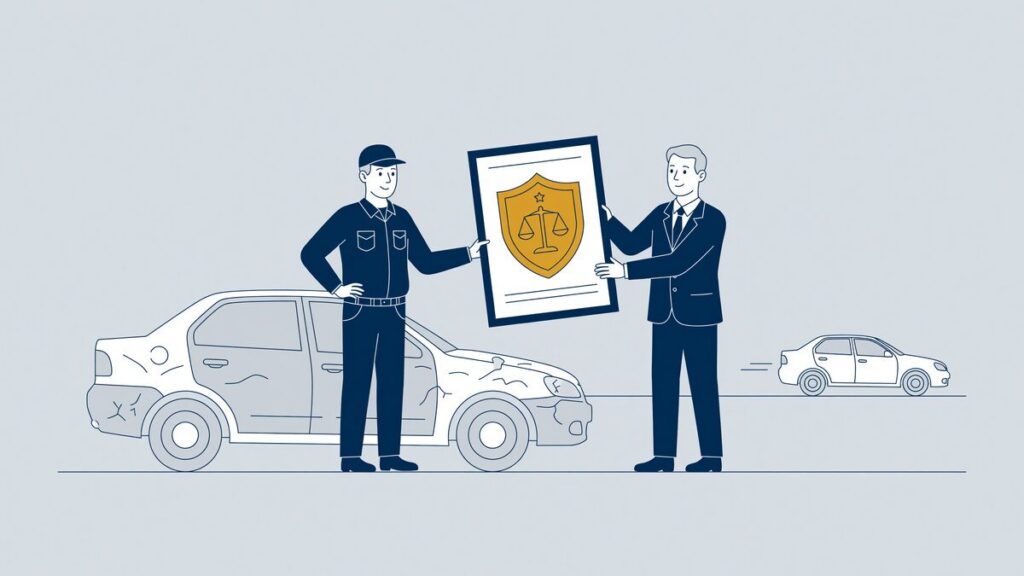

The Dutch schuldloze derde regeling (BR 7) helps prevent a qualifying innocent victim being left waiting because insurers disagree about liability. It distinguishes passengers from other innocent third parties, who may include a driver. Coverage, participating insurers and the facts must meet the scheme’s conditions.
In this article we therefore explain in detail what the schuldloze derde regime entails, when it applies and what this concretely means for your personal injury compensation. You will also read which steps you can take to obtain prompt and full compensation.
What is the schuldloze derde regeling?
The schuldloze derde regeling is a rule within Dutch insurance law intended to protect victims of traffic accidents. It concerns situations in which a person suffers damage while they had no influence on the cause of the accident.
The rule ensures that an innocent third party is not disadvantaged by a dispute between insurers about who is at fault. In other words: you do not have to wait until insurers have determined who is liable.
Who is an innocent third party?
An innocent third party is someone who did not commit a traffic error and had no influence on the driving behaviour. In practice this often concerns:
- a passenger or occupant of a car;
- An employee being transported by a colleague or employer;
- a passenger of a taxi or company van;
- a passenger in a collision between multiple vehicles.
A driver is not automatically excluded: BR 7 distinguishes an innocent driver or other third party from an innocent passenger.
Primary source: BR 7, effective 1 April 2023.
When does the schuldloze derde regeling apply?
The schuldloze derde regeling does not apply to every traffic accident. Several conditions must be met.
For example, it is required that:
- a traffic accident has occurred;
- the relevant parties and liability insurance meet the conditions of BR 7;
- the applicable passenger or third-party route is identified;
- the victim themself is not to blame for the accident.
Precisely when insurers dispute liability among themselves, this rule provides protection to the victim.
Why does the schuldloze derde regeling exist?
Without the schuldloze derde regeling, a victim would often have to wait months or even years for compensation. Insurers can argue for a long time about who is liable.
Where BR 7 applies, a lead insurer handles the loss while insurers resolve their own allocation. The extent of injury and loss still needs evidence; the scheme is not a guarantee of immediate payment of every claimed amount.
For you as a victim this mainly means peace of mind, clarity and financial certainty.
Who pays the damage under the schuldloze derde regeling?
For a qualifying passenger, the insurer of the vehicle carrying them normally handles the claim, subject to the scheme’s exception where its insured clearly has no liability. For another innocent third party, the first approached qualifying insurer normally takes the lead.
Subsequently that insurer can seek recourse against the other insurer(s). This is done entirely between insurers and does not involve the victim.
Which damage is compensated?
Under the schuldloze derde regeling in principle all personal injury damages are eligible for compensation. That means the same heads of loss are compensated as in a regular personal injury claim.
Material damage
- medical expenses;
- travel costs;
- costs for domestic help;
- adaptations to home or car;
- damage to personal belongings.
Loss of income
If you are temporarily or permanently unable to work you can claim loss of income. This also includes loss of earning capacity.
Non-material damages (smartengeld)
You may also be entitled to smartengeld. This is compensation for pain, suffering and loss of quality of life. You can read more on our page smartengeld in personal injury cases.
Schuldloze derde regeling and contributory negligence
In principle contributory negligence plays no role in the schuldloze derde regeling, because the victim is regarded as innocent. However, a dispute can arise about whether someone actually qualifies as an innocent third party.
That is precisely why it is important to have your position properly assessed.
Difference with article 185 Wegenverkeerswet
The schuldloze derde regeling is sometimes confused with the protection of vulnerable road users under article 185 of the Wegenverkeerswet (WVW).
Article 185 WVW mainly concerns pedestrians and cyclists. The schuldloze derde regeling is intended for occupants and passengers who themselves had no influence on the accident.
Evidence and liability
Although the rule protects you against lengthy liability disputes, it remains important to collect evidence. Think of:
- medical reports;
- the official report or damage form;
- witness statements;
- details of the vehicles involved.
We actively assist clients in collecting and assessing this evidence.
What should you do if you are an innocent third party?
When you are involved in an accident as an innocent third party it is important to act quickly.
- have your injuries medically documented;
- note the details of all vehicles involved;
- keep all documents and costs;
- seek legal advice.
More general information is also available on our page personal injury lawyer.
Can an insurer refuse to pay?
In practice we see insurers sometimes reluctant to apply the schuldloze derde regeling. They may, for example, assert that there is no innocent third party.
However, that does not mean this position is correct. In precisely these situations legal assistance is important.
Limitation period under the schuldloze derde regeling
Even when the schuldloze derde regeling applies a claim for damages can become time-barred. BR 7 does not replace statutory limitation rules. A direct WAM-insurer claim can have a different period from the claim against the liable person. Have all deadlines and interruption requirements checked promptly.
Different rules apply for minors.
Will legal assistance cost me money?
We seek reimbursement of reasonable legal assistance costs from the liable party or their insurer. If this does not provide funding for your case, we first assess whether you qualify for Dutch subsidised legal aid (toevoeging). Otherwise, we discuss a no cure no pay arrangement where it is suitable and permitted for your case. Arslan Advocaten will never charge you costs without discussing them with you beforehand and obtaining your approval.
Why choose Arslan Advocaten?
We have extensive experience with personal injury cases in which the schuldloze derde regeling plays a role. We know when this rule applies and ensure insurers meet their obligations.
We communicate clearly, act decisively and strive for full compensation.
Do you want to know whether you are entitled to compensation as an innocent third party? Feel free to contact us for a non-binding assessment.
Also read
- Scooter accident: who is liable and what personal injury can you claim?
- Article 6 WVW personal injury: when is there gross negligence?
- Wrong diagnosis by a doctor? These are your rights and compensation
Frequently asked questions
What exactly does the schuldloze derde regeling entail?
The schuldloze derde regeling ensures that victims of traffic accidents who are not at fault can quickly receive compensation without waiting for liability to be determined. Insurers pay the damage first and afterwards decide among themselves who ultimately bears the costs.
When does someone qualify for the schuldloze derde regeling?
BR 7 distinguishes innocent passengers and other innocent third parties, including drivers. Assess fault, coverage, participating insurers and the route applicable to the person concerned.
Who can claim the damage under the schuldloze derde regeling?
A passenger normally starts with the insurer of the vehicle carrying them; another qualifying innocent third party normally starts with the first approached insurer under BR 7. Conditions and exceptions apply.
What should I do if I, as a victim, want to benefit from this rule?
You can contact the insurer of the involved vehicle directly to report your damage. It is wise to have all relevant documents and evidence ready for a smooth handling.