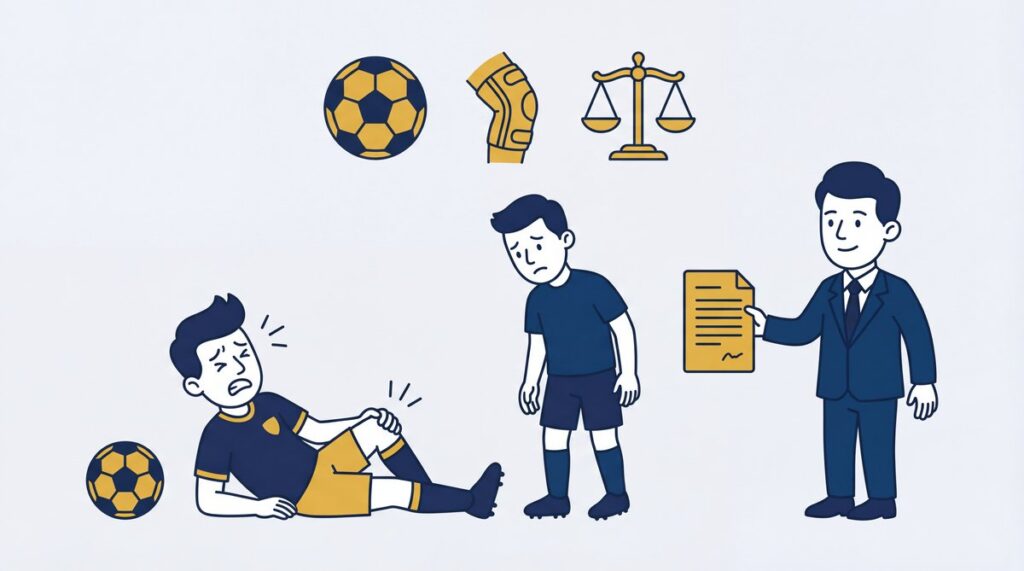

- Even as a self-employed person or freelancer, you may be entitled to compensation after a workplace accident.
- The liability of employers for self-employed persons is regulated in article 7:658 paragraph 4 of the Dutch Civil Code (BW), which establishes the duty of care of the client.
- You can claim various types of damages, including medical expenses, loss of income, and pain and suffering compensation.
- It is important to report the accident properly, gather solid medical evidence, and engage a personal injury lawyer as soon as possible.
- Arslan Advocaten offers a free first assessment and agrees funding before further work.
What is a workplace accident for self-employed persons?
A freelancer may fall within Article 7:658(4) BW where the work is part of the client’s business activities and the person depends at least partly on that client for workplace safety. The factual relationship, work and control over safety risks matter. Working on someone’s premises is not by itself sufficient.
First substantiate the circumstances that bring the work within Article 7:658(4), and the damage suffered during it. If the provision applies, the client must substantiate the relevant duty-of-care defence. See Davelaar/Allspan and a 2025 application of the criteria.
Liability of the client in a workplace accident involving a self-employed person
Unlike the extensive protection for employees (article 7:658 BW), liability for self-employed persons is more limited and depends heavily on the circumstances. Article 7:658 paragraph 4 BW states that the client has a duty of care comparable to that of an employer, but only insofar as this can reasonably be expected of them. This is also called the ‘duty of care towards the independent contractor’.
The client must demonstrate that they have reasonably taken all safety measures. These include, among others:
- Providing a safe workplace;
- Providing instructions and information about possible risks;
- Ensuring suitable personal protective equipment;
- Supervising where necessary;
- Conducting a risk inventory and evaluation (RI&E) if applicable.
If the client cannot prove that they fulfilled their duty of care, they may be held liable for your damages. This applies even if you as a self-employed person have no employment contract but worked under their authority or supervision, or used the client’s facilities.
Which types of damages can you claim as a self-employed person after a workplace accident?
If you experience a workplace accident as a self-employed person, it is important to know which types of damages you can claim from the liable party or their insurer. These damage categories are similar to those for employees, although there may be differences in proof and the scope of claims.
- Medical expenses: All costs for hospital stays, surgeries, physiotherapy, medication, and the deductible you have paid or will pay yourself.
- Loss of income: Since you as a self-employed person are not entitled to continued payment during illness, you can claim damages for the loss of income you cannot generate due to the accident.
- Future loss of income: If the injury leads to permanent limitations and you can work less or accept fewer assignments.
- Household help and additional care: If you can no longer take care of your household or personal care due to your injury.
- Travel expenses: Costs for transportation to doctors, therapy, or specialists.
- Pain and suffering (smartengeld): an individual assessment of the injury, recovery and impact on life. There is no fixed tariff for being self-employed or for a particular accident type. Financial losses, including lost profit, are calculated separately.
Practical steps after a workplace accident as a self-employed person
If you as an independent contractor are involved in a workplace accident, it is essential to take the right steps immediately to protect your rights:
- Always report the accident to the client and ensure an official accident report is made. This is important evidence.
- Seek medical help as soon as possible. Have the doctor or hospital properly document the cause and nature of the injury. Medication, diagnoses, and treatments must be clearly recorded.
- Take photos and collect evidence. Photos of the accident situation, hazardous conditions, defective machinery, or dangerous substances are crucial.
- Obtain witness statements. Note the contact details of colleagues, clients, or others who witnessed the accident.
- Check whether the accident has been reported to the Dutch Labour Inspectorate (Inspectie SZW). For serious accidents, the client is obliged to report this; this can help establish liability.
- Contact a specialized personal injury lawyer as soon as possible. They can advise you legally and assist with claiming compensation. See for example our personal injury services.
Why legal assistance from Arslan Advocaten for workplace accidents involving self-employed persons?
At Arslan Advocaten, we understand that a workplace accident self-employed person can be a traumatic experience with major consequences for health and income. Our team consists of specialized personal injury lawyers and NIVRE-registered experts with extensive experience in workplace accidents for freelancers and self-employed persons. We have successfully assisted clients in sectors such as construction, logistics, hospitality, and healthcare.
Our approach is characterized by:
- Personal attention and tailored guidance from the first contact;
- Strategic and sharp negotiation with insurers;
- Calculating and claiming all relevant damage items, including pain and suffering compensation;
- Litigating if desired to enforce a fair compensation;
- The first consultation is free. We assess whether reasonable legal costs can be recovered from the liable party. Otherwise, we consider subsidised legal aid and then, where permitted and appropriate, a no-cure-no-pay arrangement. We never charge you without prior consultation and your approval.
This ensures you receive what you are entitled to without risking high costs. You can read more about our expertise on our pages personal injury Rotterdam or Amsterdam and The Hague.
Frequently asked questions
Does it cost me money to hire a personal injury lawyer?
We seek reimbursement of reasonable legal assistance costs from the liable party or their insurer. If this does not provide funding for your case, we first assess whether you qualify for Dutch subsidised legal aid (toevoeging). Otherwise, we discuss a no cure no pay arrangement where it is suitable and permitted for your case. Arslan Advocaten will never charge you costs without discussing them with you beforehand and obtaining your approval.
Can I hold my client liable without losing my assignment?
The claim may be against the client itself; whether its insurer covers it is a separate question. Future assignments cannot be guaranteed. Assess the contract and any pressure or adverse response to the claim before taking further steps.
How long do I have to file a damage claim after a workplace accident?
The statutory limitation period is 5 years from the day you became aware of your damage and liability (for example, the accident itself). Do not wait too long to act, as timely engagement of a lawyer is crucial for gathering evidence.
Which legal articles are important for my case?
The most important legal provisions are article 7:658 and paragraph 4 of that article of the Dutch Civil Code (BW), which establish the duty of care of employers and clients, and article 6:96 BW for reimbursement of legal costs for the injured party.
Read also
- Personal injury workplace accident complete guide
- Reporting a workplace accident to the Dutch Labour Inspectorate (Inspectie SZW)
- Pain and suffering compensation for workplace accidents: examples and amounts
Feel free to contact Arslan Advocaten for a free initial consultation. We are ready to protect your rights and assist you with your damage claim, so you can count on the compensation you are entitled to after a workplace accident as a self-employed person or freelancer.