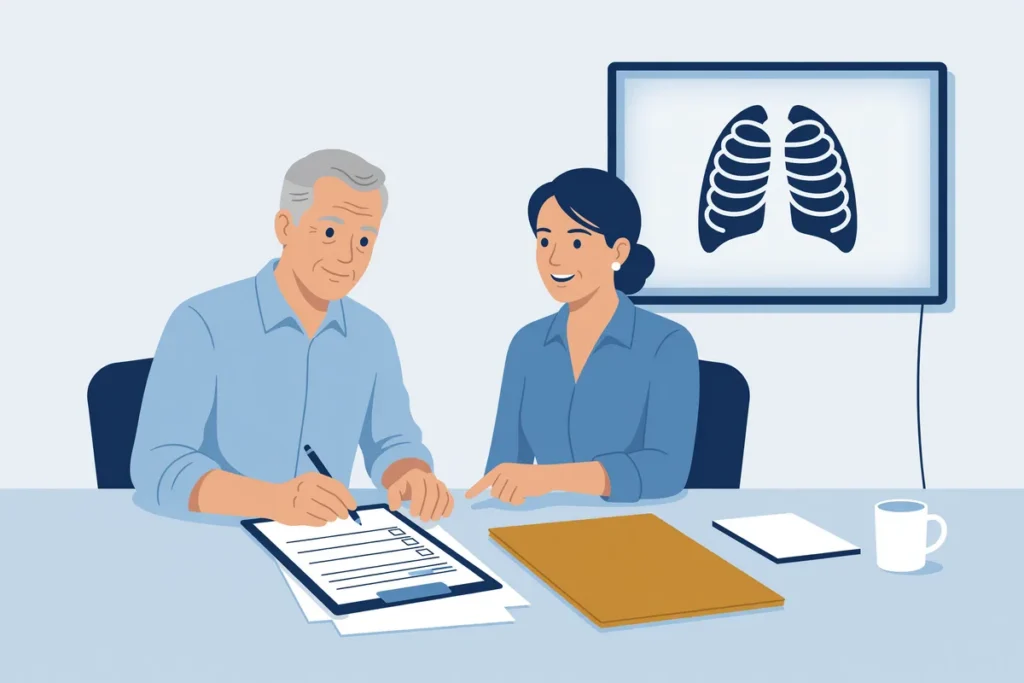
A registered partnership does not end because you start living apart or sign a letter together. To end it by mutual consent, you need a lawyer or a civil-law notary. In certain situations involving parental authority over minor children, and where there is a dispute, proceedings before the district court are required. Even then, the termination must be correctly registered. Which route is right for you therefore depends on your family situation, the extent to which you agree and what needs to be arranged financially.
Written by Öznur Batur, attorney at Arslan Advocaten, practising in personal and family law. Registered in the specialisation register of the Netherlands Bar for personal and family law and criminal law. Last updated: 19 September 2026. General information is not legal advice about your own situation.
Below you can read how to choose the route, which arrangements are needed and which obligations may continue to exist. The explanation concerns the Dutch procedure. If the partnership was entered into abroad or a partner lives elsewhere, jurisdiction, the applicable law and recognition abroad must be assessed separately.
First establish what kind of relationship you have
A registered partnership is not the same as a cohabitation agreement. The partnership is registered with the civil registry and has statutory consequences for matters such as maintenance and property. A cohabitation agreement records arrangements between people who live together. Separating when you only have a cohabitation agreement therefore does not require the same formal dissolution procedure.
Check the partnership certificate and any registered partnership agreement. Also find out where and when the partnership was entered into. A registration abroad may have a different legal meaning from a Dutch registered partnership. The name on a document does not always tell you which Dutch rules apply to it.
Are you married? Then the marriage is ended by divorce. If you are unmarried and living together, read about separating after cohabitation. By taking this first step carefully, you avoid making arrangements based on the wrong legal starting point.
When can you separate without going to court?
The out-of-court route requires mutual consent. You must genuinely be able to agree on the termination and the arrangements it requires. A lawyer or civil-law notary draws up the documents or assists in recording them. The termination declaration is then registered with the civil registry.
The statutory exclusion of this route is more precise than simply asking whether there is a minor child somewhere in the family. Article 1:80c(3) of the Dutch Civil Code (BW) refers to parental authority, joint or sole, over children of both partners, and to joint parental authority over children under Article 1:253sa or 1:253t of the Dutch Civil Code. In the usual situation of minor children of both partners, you must therefore go to court. Have the specific situation in a blended family assessed.
Even without children, it is sensible for both partners to understand which financial claims they are giving up. Agreement is only of use if it is based on sufficient information about income, assets, debts and pension. A signature does not make up for a missing valuation of a home or a business.
When is the district court needed?
If the out-of-court route is excluded because of your parental authority situation, or if there is no agreement on the termination, a lawyer can file a petition for dissolution. This can be done by joint petition or at the request of one partner. The other partner’s refusal to sign therefore does not automatically mean that the partnership must continue.
In joint proceedings, arrangements can be submitted to the court. In a dispute, the other partner is given the opportunity to respond. The lawyer assesses which requests can be dealt with together and which financial or other issue requires a separate approach.
Bear in mind the position of the lawyer. A lawyer acting for one partner represents that partner’s interests. Where both partners are assisted jointly, it must be clear in advance how a later conflict of interest will be handled. You do not have to accept a proposal from your partner’s adviser without assessing it yourself.
What do you need to arrange regarding the children?
In a formal termination involving children, parental authority, care, the children’s main residence and the costs all play a role. These are separate issues. The end of the partnership does not automatically end joint parental authority. Nor does joint parental authority mean a mandatory schedule under which the children spend exactly fifty per cent of their time with each parent.
A parenting plan sets out, among other things, the division of care, the exchange of information and the division of costs. Make specific arrangements about holidays, collecting and dropping off the children, decisions about school and the way you will consult each other. Also agree how you will discuss a necessary change. A plan that merely says the parents will settle everything by mutual agreement offers little to hold on to in a conflict.
Involve the children in a way that suits their age and development. Do not ask a child to choose between parents. For the practical details, read the article on drawing up and amending a parenting plan. If a temporary arrangement is urgently needed, tell your lawyer the specific reason and date straight away.
Spousal maintenance and child maintenance
After a registered partnership, spousal maintenance may be relevant. This involves examining need, the ability to earn an income oneself and the ability to pay. A difference in income does not give an automatic right to a fixed percentage of the other partner’s income.
The rules on duration and variation require a separate assessment. Under the system in force since 2020, the main rule for spousal maintenance is half the duration of the relationship to which the arrangement relates, up to a maximum of five years, but important exceptions and transitional law may lead to a different duration. Have the specific calculation and the applicable system checked before you set an end date.
Child maintenance is a separate matter. Parents remain responsible for their children, even if they agree that no spousal maintenance will be paid. The maintenance obligation does not automatically end on the child’s eighteenth birthday. An agreement that neither party will pay anything further must therefore be carefully defined. More information can be found under spousal maintenance and child maintenance.
The home and the monthly costs
With an owner-occupied home, it must be clear who owns it, which mortgage obligations exist and whether a sale or a buy-out is feasible. An agreement that one partner will pay the mortgage from now on does not automatically release the other partner from liability towards the bank. That requires the separate cooperation of the lender.
Make temporary arrangements about the mortgage, rent, insurance, energy and other costs. Record whether payments are to be borne definitively by one partner or are to be settled later. Also discuss what happens if a planned buy-out cannot be financed in time. A final date and an alternative sales process prevent a temporary situation from continuing indefinitely.
In the case of rented accommodation, the tenancy agreement and tenancy law play their own role. Moving out of the home or deregistering from the municipal register does not change your contractual position in every situation. Use the existing explanation of fixed costs during a divorce as a starting point and have your own agreement assessed.
Assets and registered partnership agreements
Which assets and debts must be divided depends on the registered partnership agreement, the relevant dates and the applicable law. Also examine what was already private property before the registration, which assets were held jointly and whether any gifts or inheritances were received. The name on a bank account alone is not enough to answer every question about assets.
Where there is a partnership agreement, a settlement clause may be important. Even if assets have remained in separate ownership, there may be an obligation to settle or to pay compensation. Gather the complete notarial deed and the financial documents from the relevant period. A brief summary from memory is not sufficient for this.
Do not divide money or assets without first knowing which obligations stand against them. State in the agreement how unknown debts, tax assessments yet to be received and the costs of implementation will be dealt with. A general full and final discharge can have far-reaching consequences and should only be included once it is clear what is being settled.
Do not forget the pension
Pension is a separate part of the settlement. Find out which pension schemes exist and which rights were accrued during the partnership. Distinguish between the retirement pension and the partner’s pension. An arrangement regarding one of those rights does not automatically cover the other.
The pension provider needs information and sometimes timely notification in order to implement the arrangements correctly. Different rules may apply to pension rights abroad. Therefore, before signing, establish what can be divided, which notification is needed and who will take care of it. Read the further explanation of pensions on divorce.
Registration is a separate step
When ending the partnership by mutual consent, the declaration must reach the registrar of births, deaths, marriages and registered partnerships no later than three months after the termination agreement was concluded. That statutory time limit follows from Article 1:80d(3) of the Dutch Civil Code. A signed agreement kept only in your own records does not end the partnership.
Where the partnership is dissolved by the district court, the termination likewise takes effect upon registration. Through Article 1:80e of the Dutch Civil Code, the rule in Article 1:163(3) of the Dutch Civil Code also applies. The six-month registration period is linked to the decision becoming final and conclusive. Have your lawyer monitor which declarations are required and when the period starts to run.
Afterwards, ask for confirmation of the registration. Also check that the arrangements are being carried out. The formal partnership may have ended while the home has not yet been transferred, the bank has not yet released a partner from liability or the pension has not yet been dealt with.
Which documents help at the first meeting?
Gather the partnership certificate, any partnership agreement, details about the children and parental authority, recent income documents, an overview of assets and debts, and pension information. Bring any existing court decisions and arrangements. Also state which information is still missing or is held only by your partner.
Then draw up a short list with three kinds of questions: what needs to be arranged immediately, what have you already agreed on and what is in dispute? This helps to keep temporary solutions separate from the final settlement. You do not need a complete file for the first contact. An approaching deadline, however, should be reported immediately.
Example of a workable arrangement
Two registered partners without minor children agree on ending their partnership. One of them wants to take over the home. They record not only the value and the buy-out sum, but also the date by which the financing and the release from liability must be in place. If that does not work out, the home will be sold in accordance with arrangements agreed in advance.
The lawyer also monitors the termination declaration and its registration. In this way, both the legal termination and the implementation of the arrangement on the home are dealt with. This is a fictitious example; feasibility always depends on the bank, the ownership situation and the arrangements made.
Frequently asked questions
Can we end our partnership ourselves at the municipality?
The ordinary termination by mutual consent requires the involvement of a lawyer or civil-law notary and the prescribed declaration. Simply informing the municipality together that you have separated is not enough.
Do we have to go to court if we fully agree?
That may still be necessary because of the statutory rules on parental authority over minor children. Have your family situation checked. Agreement can, however, make the procedure simpler.
Can my partner block the dissolution?
A partner cannot block a unilateral petition simply by refusing to sign. There may, however, be a dispute about the conditions and the additional decisions requested.
Does legal separation also apply to a partnership?
Statutory legal separation is an arrangement for married couples. For a registered partnership, rely on the termination routes available for that purpose.
Is the agreement also binding on the bank?
Your mutual arrangements do not automatically change the bank’s rights. For example, the bank’s separate consent is needed to release a partner from mortgage liability.
What does it cost to dissolve a registered partnership?
That depends on the route chosen, the issues in dispute and the experts required. Discuss the work involved in advance and whether subsidised legal aid is possible. A civil-law notary, a valuation expert or an implementation step may involve separate costs.
Would you like to know which route suits your situation? Contact Arslan Advocaten and mention whether there are minor children, a partnership agreement or a specific deadline.
Read also
- Interim measures in divorce proceedings
- Ex-partner refuses to sell the home
- Living together and separating
- Dividing pensions after divorce
- All information about family law
Sources and legal basis
- Dutch Civil Code, Book 1, in particular Articles 80c, 80d and 80e, together with the cross-referencing provisions mentioned therein.
- Dutch central government information on ending a registered partnership.